






What's Happening?
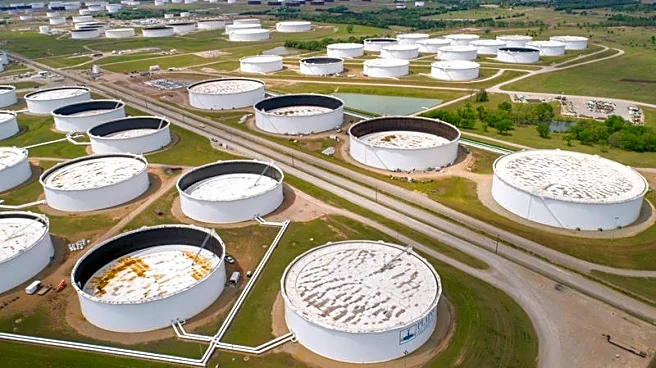
The American Petroleum Institute (API) has reported a significant decrease in U.S. crude oil inventories, with a drop of 6.75 million barrels for the week ending May 29. This follows a previous decline of 2.8 million barrels, surpassing analysts' expectations
of a 3.6 million barrel draw. Despite these recent reductions, U.S. crude inventories have increased by 16 million barrels over the year. Concurrently, the U.S. Strategic Petroleum Reserve (SPR) saw a drawdown of 8 million barrels, reducing its total to 357.1 million barrels, the lowest since January 2024. U.S. oil production has also risen slightly to 13.715 million barrels per day. In contrast, gasoline inventories increased by 3.45 million barrels, despite being 6% below the five-year average. Distillate inventories fell by 214,000 barrels, remaining 11% below the five-year average.
Why It's Important?
The decline in crude oil inventories and the drawdown from the SPR are significant as they reflect ongoing efforts to manage oil supply and stabilize prices. The increase in gasoline inventories, despite being below the five-year average, suggests a complex dynamic in fuel supply and demand. These developments are crucial for the U.S. energy sector, impacting oil prices and influencing economic conditions. The rise in U.S. oil production indicates a potential shift in market dynamics, possibly affecting global oil prices and trade. Stakeholders in the energy industry, including producers and consumers, are likely to be affected by these changes, as they navigate the implications for pricing, supply chain management, and strategic planning.
What's Next?
The continued monitoring of crude oil and gasoline inventories will be essential for understanding future market trends. The U.S. government and energy companies may need to adjust their strategies in response to these inventory changes. Potential reactions could include further adjustments to production levels, strategic releases from the SPR, or policy changes aimed at stabilizing the market. The global oil market will also be watching these developments closely, as shifts in U.S. inventory levels can influence international oil prices and trade dynamics.