


What's Happening?
Two Federal Reserve officials have indicated that there is no immediate need to alter the current monetary policy, despite market expectations for further rate cuts this year. The officials, including Federal Reserve Bank of Boston President Susan Collins,
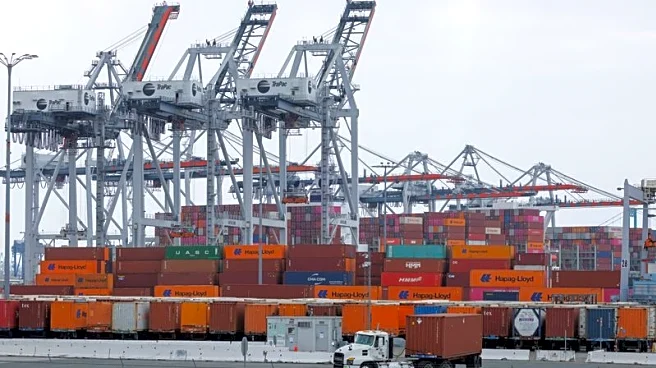
emphasized the importance of a cautious approach due to ongoing inflationary pressures. Collins noted that while the job market shows signs of stability, inflation remains above the Fed's 2% target. Richmond Fed leader Thomas Barkin echoed these sentiments, suggesting that the current monetary policy is well-positioned to address economic risks. The officials also referenced a recent Supreme Court decision that invalidated many of President Trump's trade tariffs, which the president countered with additional tariffs. However, they believe this will not significantly impact the economy.
Why It's Important?
The Federal Reserve's stance on interest rates is crucial for economic stability, influencing borrowing costs for businesses and consumers. The decision to maintain current rates reflects concerns about persistent inflation, which can erode purchasing power and economic growth. By holding rates steady, the Fed aims to balance economic growth with inflation control. This cautious approach may affect sectors reliant on low borrowing costs, such as housing and consumer goods. Additionally, the Fed's response to trade policy changes underlines the complex interplay between monetary policy and international trade dynamics, impacting U.S. economic competitiveness.
What's Next?
The Federal Reserve's next steps will likely depend on further economic data, particularly regarding inflation trends. If inflation shows signs of moderating, the Fed may consider rate cuts later in the year. However, any decision will be influenced by broader economic indicators, including employment rates and global economic conditions. Stakeholders, including businesses and investors, will closely monitor the Fed's communications for signals on future policy adjustments. The ongoing trade policy developments and their economic implications will also be a key factor in the Fed's decision-making process.