

What's Happening?
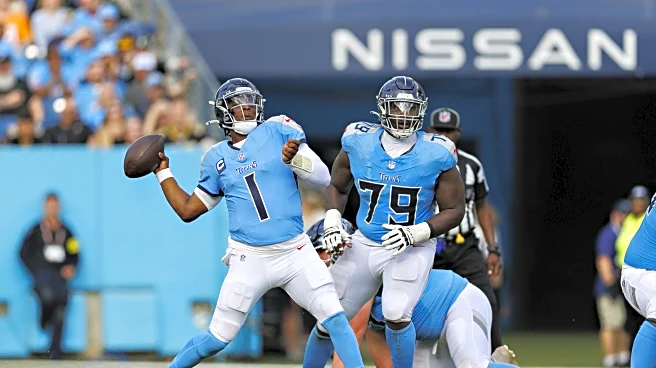
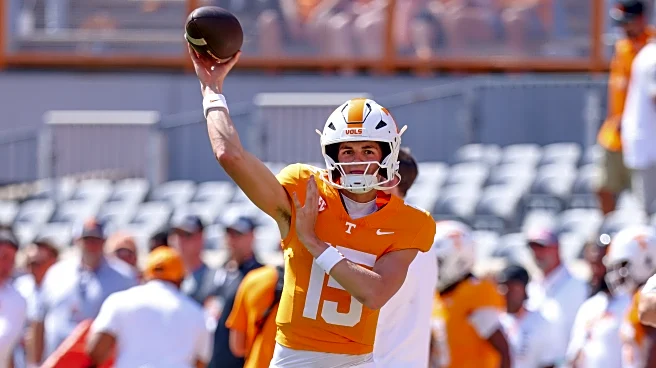
Tennessee quarterback Joey Aguilar's attempt to secure an additional year of eligibility to play college football was denied by a Knox County Chancery Court judge. Aguilar, who has played three seasons in the NCAA, sought an injunction to allow him a fourth
year, arguing that his time in junior college should not count against his eligibility. The court dissolved a temporary restraining order that had previously allowed him to play for the Volunteers in the 2025 season. Aguilar's college football journey included playing at Diablo Valley Community College, Appalachian State, and Tennessee, where he completed 67.3% of his passes for 3,565 yards with 24 touchdowns and 10 interceptions last season. Despite his efforts, the court ruled against him, citing potential implications for NCAA eligibility rules.
Why It's Important?
The court's decision has significant implications for Aguilar and potentially other student-athletes in similar situations. Aguilar's case highlights the complexities of NCAA eligibility rules and the challenges athletes face in navigating them. The denial of his injunction means Aguilar will not be able to play another season, potentially affecting his prospects for name, image, and likeness opportunities, which his lawyers estimated could be worth $2 million to $3 million. The ruling underscores the NCAA's commitment to maintaining its eligibility standards, which aim to ensure fair competition among student-athletes. This decision may influence future cases and the ongoing debate over NCAA policies and athlete rights.
What's Next?
Aguilar is set to attend the NFL combine, shifting his focus from college football to pursuing a professional career. The NCAA, meanwhile, continues to face legal challenges regarding its eligibility rules, with several lawsuits still pending. The organization has expressed its intent to defend its policies and work with Congress to provide stability for college athletes. The outcome of Aguilar's case and others like it could prompt further discussions and potential reforms in NCAA regulations, particularly concerning athlete eligibility and compensation.