





What's Happening?
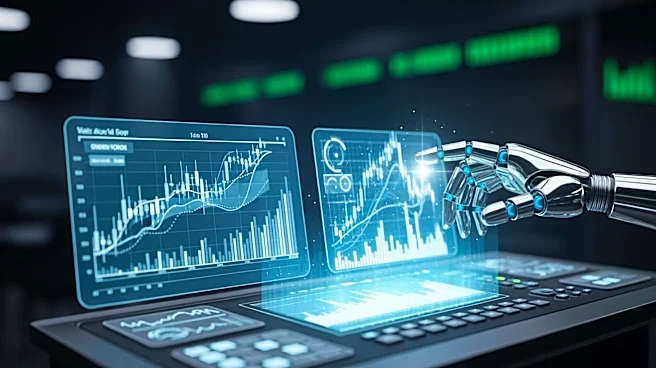
A growing number of day traders are turning to AI-powered tools to enhance their trading strategies and mitigate common human errors such as panic-selling and over-trading. According to a 2025 survey by eToro, the use of AI in investment decision-making
has surged by 75% over the past year. Traders like Matt C. and Brendan Li have reported significant improvements in their trading performance by employing AI to automate and optimize their trading processes. AI tools, such as those developed by René Balke and Dr. Reid Daitzman, are being used to create semi-automated trading systems that help traders manage emotions and adhere to strategies. These systems are designed to provide real-time market data and trading signals, allowing traders to make more informed decisions.
Why It's Important?
The integration of AI in trading represents a significant shift in the financial markets, potentially leveling the playing field between retail traders and institutional investors. By reducing emotional decision-making and enhancing strategy adherence, AI tools can improve trading outcomes and reduce losses. This technological advancement could democratize access to sophisticated trading strategies, previously available only to large financial institutions. As more traders adopt AI, the market dynamics could shift, with increased efficiency and potentially reduced volatility. However, the reliance on AI also raises questions about the future role of human intuition and expertise in trading.
What's Next?
As AI continues to gain traction in the trading community, it is likely that more traders will explore and adopt these technologies. This trend could lead to further innovations in AI trading tools, making them more accessible and user-friendly. Financial institutions may also begin to integrate AI more deeply into their trading operations, potentially leading to regulatory scrutiny and the need for new guidelines to ensure fair and transparent market practices. The ongoing development of AI in trading will likely prompt discussions about the ethical implications and the need for oversight to prevent market manipulation.
Beyond the Headlines
The rise of AI in trading also highlights broader societal and economic implications. As AI tools become more prevalent, there may be a shift in the skills required for successful trading, with a greater emphasis on programming and data analysis. This could lead to changes in educational and professional development programs, as traders seek to acquire the necessary skills to leverage AI effectively. Additionally, the increased use of AI in trading raises questions about data privacy and security, as traders rely on AI platforms to process sensitive financial information.