





What's Happening?
Waymo, a leader in autonomous driving technology, has recently closed a $16 billion funding round, significantly surpassing the current market valuation of the global autonomous driving software market, which is estimated at $1.8 billion for 2024. This
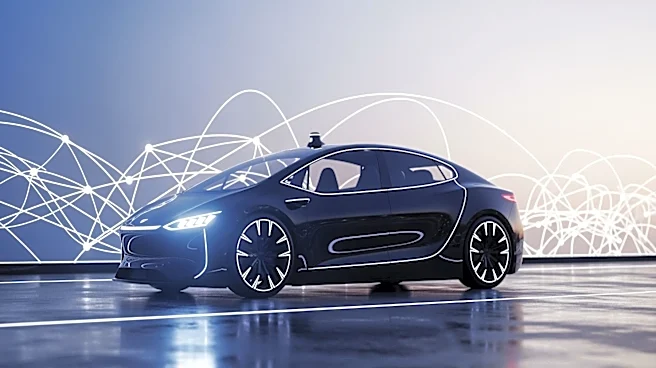
funding round, led by Alphabet, highlights the substantial financial resources required to develop, validate, and operate a large-scale autonomous vehicle fleet. Waymo's fleet, consisting of around 2,500 vehicles, primarily Jaguar I-Paces, is equipped with advanced technologies such as lidar, radar, and cameras. Despite the high costs, Waymo continues to expand its operations, providing over 400,000 rides per week across six U.S. metropolitan areas, with plans to launch in more than 20 additional cities by 2026.
Why It's Important?
The significant investment in Waymo underscores the financial challenges and capital intensity associated with developing fully autonomous vehicles. While the autonomous driving software market is projected to grow to $7 billion by 2035, the costs of achieving full autonomy far exceed these figures. Waymo's funding highlights the gap between market valuations and the actual expenses involved in creating a driverless commercial service. This development is crucial for stakeholders in the automotive and technology sectors, as it emphasizes the need for substantial financial backing to remain competitive in the race towards autonomy. The investment also reflects the strategic importance of autonomous technology for Alphabet and other investors, who are willing to absorb significant losses to achieve long-term gains.
What's Next?
Waymo plans to continue its expansion into new markets, including international cities like Tokyo and London, by 2026. The company is also addressing regulatory challenges, as evidenced by a recent software recall following incidents involving its robotaxis. As Waymo and other companies push towards full autonomy, regulatory scrutiny and public safety concerns will likely increase. The success of Waymo's expansion and technological advancements will depend on its ability to navigate these challenges while maintaining investor confidence. The broader industry will be watching closely to see how Waymo's developments influence market dynamics and regulatory frameworks.
Beyond the Headlines
The pursuit of fully autonomous vehicles raises ethical and legal questions, particularly concerning safety and liability. Incidents involving autonomous vehicles, such as the one under investigation by the NHTSA, highlight the potential risks and the need for robust safety protocols. Additionally, the transition to driverless technology could have significant implications for employment in the transportation sector, as well as urban planning and infrastructure development. As companies like Waymo advance towards autonomy, these broader societal impacts will need to be addressed to ensure a smooth transition.