


What's Happening?
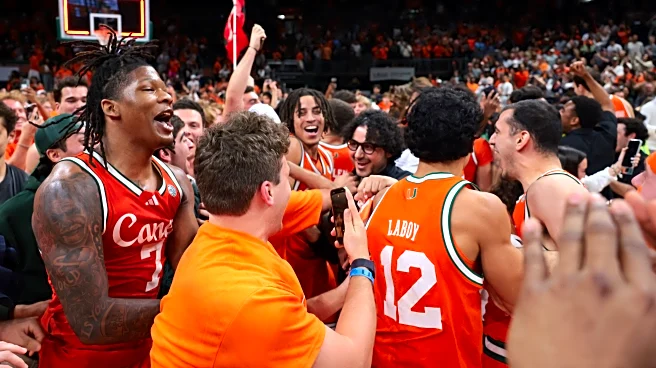
Carson Beck, a 23-year-old quarterback, has played a pivotal role in the Miami Hurricanes' advancement to the College Football Playoff quarterfinals. After transferring from Georgia, Beck has led Miami to a significant victory over Texas A&M, marking the first time the team has reached and won a CFP game in its history. Beck, originally from Jacksonville, Florida, was highly rated in the class of 2020 and received multiple scholarship offers from Florida-based schools before initially signing with Georgia. His transfer to Miami has brought his extensive experience to the team, having been part of college football since 2020. Beck's eligibility for the 2026 season is due to a combination of a redshirt year and an NCAA COVID-19 waiver, which extended
his eligibility beyond the typical timeframe.
Why It's Important?
Carson Beck's performance is crucial for Miami's football program, as it highlights the impact of strategic player transfers in college sports. His leadership and experience have been instrumental in Miami's historic playoff run, showcasing the potential benefits of the NCAA's transfer portal system. This development underscores the importance of player mobility in college athletics, allowing teams to strengthen their rosters and improve competitiveness. For Miami, Beck's success could enhance the program's reputation, attract future talent, and increase its visibility on the national stage. Additionally, the NCAA's decision to extend eligibility due to COVID-19 has allowed athletes like Beck to continue contributing to their teams, demonstrating the long-term effects of pandemic-related policy changes in sports.
What's Next?
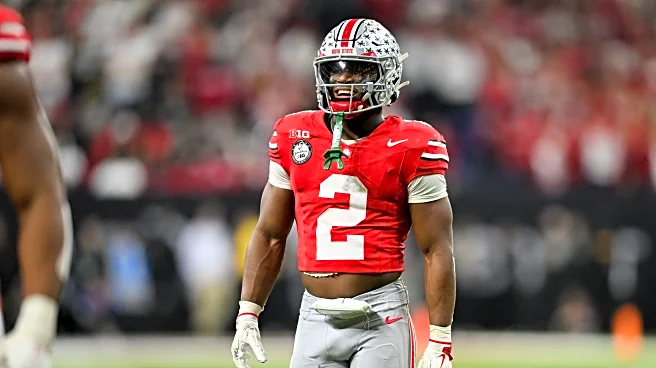
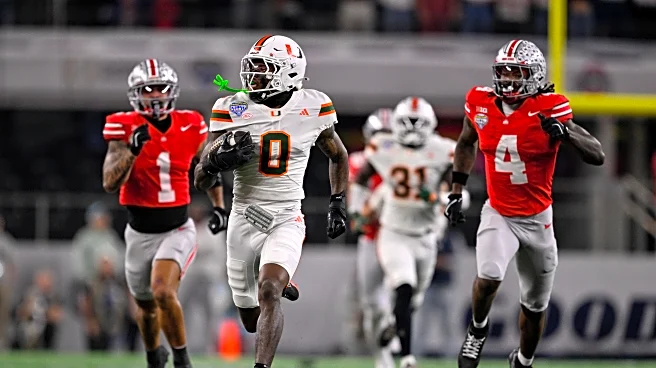
The Miami Hurricanes are set to face No. 2 Ohio State in the Cotton Bowl, a significant challenge that will test Beck's skills and leadership. A strong performance could further elevate Beck's profile and potentially influence his prospects in professional football. For Miami, advancing further in the playoffs could solidify its status as a rising power in college football, potentially leading to increased recruitment opportunities and financial benefits from heightened media attention and fan engagement. The outcome of the upcoming game will be closely watched by stakeholders in college sports, as it may influence future decisions regarding player transfers and eligibility policies.