







What's Happening?
Gold prices have fallen more than 1% and are on track for a weekly loss, driven by rising oil prices that are stoking inflation fears. Spot gold is down 1.1% at $4,568.82 per ounce, while U.S. gold futures for June delivery have also decreased. The surge
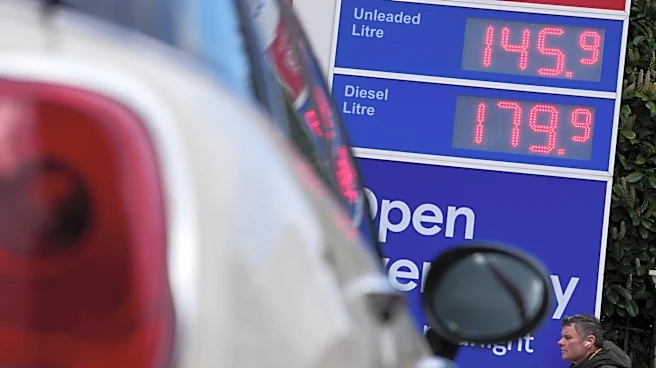
in oil prices, partly due to geopolitical tensions in the Strait of Hormuz, is raising concerns about a global economic slowdown and higher inflation. This environment discourages central banks from cutting interest rates, impacting gold's appeal as a hedge against inflation. Despite the current pressure, UBS analysts maintain a positive outlook for gold, citing factors such as upcoming U.S. midterm elections and expectations of a weaker U.S. dollar.
Why It's Important?
The decline in gold prices amid rising oil prices highlights the complex interplay between commodities and inflation. Gold, traditionally seen as a safe haven during geopolitical uncertainty, is losing its appeal in a high-interest-rate environment. The elevated oil prices are contributing to inflationary pressures, which could deter central banks from easing monetary policy. This situation underscores the challenges faced by investors seeking to hedge against inflation while navigating volatile commodity markets. The outlook for gold remains influenced by broader economic factors, including currency fluctuations and central bank policies.
What's Next?
As oil prices continue to rise, the pressure on gold may persist, especially if inflation concerns remain elevated. Investors will be watching central bank decisions closely, as any shifts in interest rate policies could impact gold's attractiveness. The geopolitical situation in the Middle East, particularly Iran's stance on the Strait of Hormuz, will also be a key factor in determining future commodity prices. Analysts suggest that gold prices could rebound if geopolitical tensions ease or if central banks signal a shift in monetary policy.