







What's Happening?
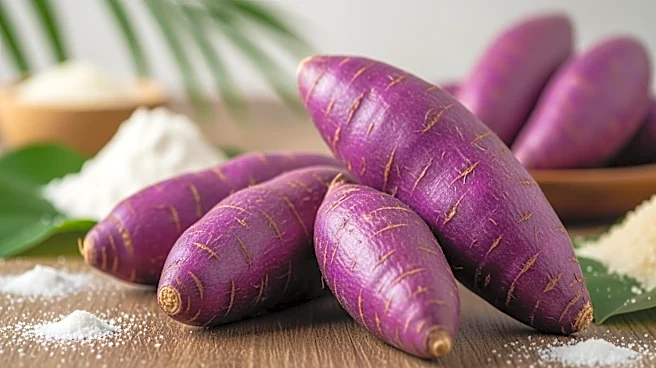
Ube, a purple yam native to the Philippines, has gained international popularity, particularly in the food and beverage industry. Jeffrey Cesari, a former auditor, plans to launch an ube latte mix in Paris after discovering the ingredient's potential
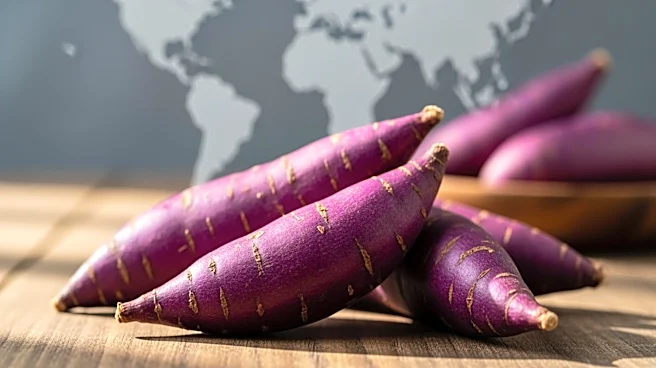
during a visit to Istanbul. However, sourcing high-quality ube has proven challenging due to its recent surge in demand. The global interest in ube has been partly driven by a shortage of matcha, leading brands like Starbucks to introduce ube-flavored products. Despite its growing popularity, the supply chain for ube remains underdeveloped, with many farmers in the Philippines struggling to meet international demand.
Why It's Important?
The rising demand for ube highlights the impact of social media and global trends on food consumption patterns. As consumers seek new and exotic flavors, ingredients like ube are becoming more mainstream, creating opportunities for businesses to innovate and expand their product offerings. However, the challenges in sourcing ube underscore the complexities of global supply chains, particularly for niche agricultural products. The situation also raises questions about the sustainability and ethical implications of increased demand on local farmers, who may not benefit equitably from the global market. Addressing these challenges requires collaboration between governments, businesses, and farmers to ensure fair trade practices and sustainable production methods.
What's Next?
Efforts to improve the ube supply chain are underway, with initiatives to increase production and establish direct connections between farmers and international buyers. The Philippines government is working with local universities to boost ube cultivation, targeting key markets like the US and UK. However, convincing farmers to grow more ube remains a challenge due to financial and logistical barriers. As demand continues to rise, there may be increased pressure on the industry to develop more efficient and transparent supply chains. This could lead to innovations in agricultural technology and practices, as well as new business models that prioritize sustainability and fair trade.