

What's Happening?
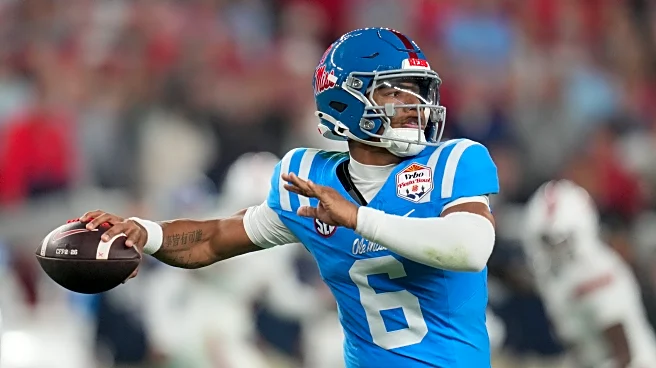
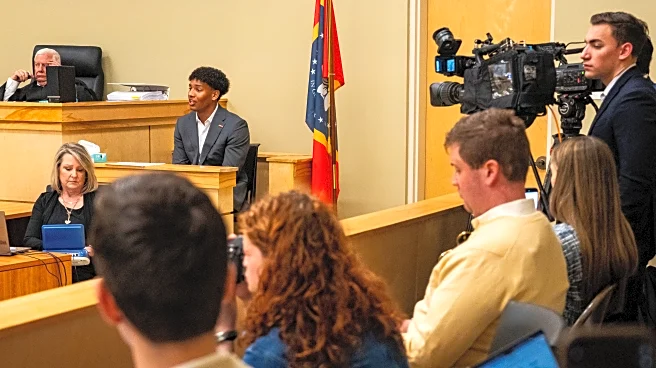
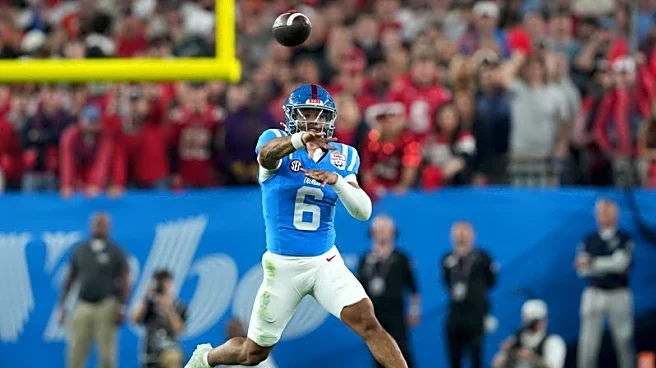
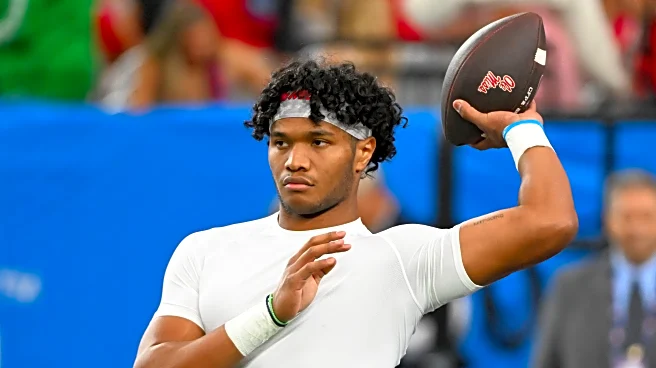
Trinidad Chambliss, a quarterback for Ole Miss, has been granted an extra year of eligibility by a Mississippi state court, allowing him to play for the Rebels in 2026. This decision came after Chambliss was initially denied twice by the NCAA. The ruling was made by Judge Robert Q. Whitwell, who has ties to Ole Miss, highlighting the complex and often controversial nature of eligibility decisions in college sports. This case is part of a broader trend where athletes are seeking legal recourse to extend their collegiate careers, with Chambliss being the 11th player to receive such an injunction since 2024. The NCAA has expressed concerns over the inconsistency of court decisions and is advocating for federal legislation to provide stability in the governance
of college athletics.
Why It's Important?
The ruling underscores the ongoing challenges within the NCAA regarding athlete eligibility and the broader implications for college sports. The decision not only affects Chambliss and Ole Miss but also sets a precedent for other athletes seeking similar extensions. This situation highlights the tension between the NCAA's regulations and the legal system, as more athletes turn to the courts to challenge eligibility decisions. The NCAA's call for federal intervention suggests a need for a more unified approach to managing eligibility, which could impact the future of college athletics, including recruitment, team dynamics, and the financial aspects of college sports programs.
What's Next?
With the NCAA facing increasing legal challenges, the organization may intensify its efforts to lobby Congress for federal legislation that could standardize eligibility rules across the country. This could lead to significant changes in how eligibility is determined and enforced, potentially reducing the number of court cases. Meanwhile, other athletes and their legal teams may be encouraged by Chambliss's success to pursue similar legal actions, further complicating the NCAA's position. The outcome of these cases could influence the NCAA's policies and the overall landscape of college sports.
Beyond the Headlines
The case raises ethical questions about the fairness and integrity of the eligibility process, especially when decisions are influenced by local courts with potential conflicts of interest. It also reflects a shift in college sports from amateurism towards a more professional model, where athletes' rights and financial interests are increasingly prioritized. This evolution could lead to a reevaluation of the NCAA's role and the balance between maintaining competitive fairness and supporting athletes' aspirations.