



What's Happening?
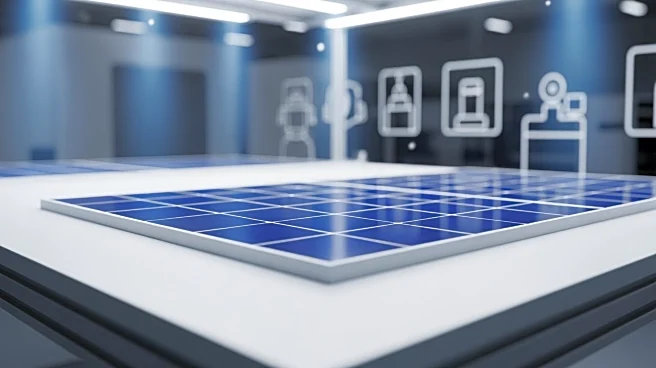
Tesla is embarking on a significant hiring initiative to support its ambitious plan to become the largest U.S. manufacturer of solar energy components. The company, led by Elon Musk, aims to establish 100 gigawatts of domestic solar production capacity by the end of 2028. This goal was recently publicized through job postings and statements from senior executives, including Seth Winger, Tesla's senior manager for solar products engineering. The hiring drive is part of Tesla's strategy to address the slowing sales of its electric vehicles by focusing on renewable energy solutions. The company has also unveiled a new solar panel produced at its Buffalo, New York factory. Despite the ambitious plans, the specific locations for the new production capacity remain
undecided.
Why It's Important?
Tesla's initiative to expand its solar manufacturing capacity is significant for the U.S. renewable energy sector. By aiming to produce 100 gigawatts of solar energy components domestically, Tesla is positioning itself as a leader in the transition to renewable energy. This move could potentially create numerous jobs and stimulate economic growth in the manufacturing sector. Additionally, it aligns with broader global trends towards sustainable energy solutions, which are increasingly important as demand for electricity rises, particularly from data centers linked to artificial intelligence expansion. However, this initiative contrasts with President Trump's stance on renewable energy, which he has criticized as costly and inefficient, and his efforts to reduce clean energy subsidies.
What's Next?
As Tesla progresses with its hiring drive, the company will likely need to finalize the locations for its new production facilities. This decision will be crucial for local economies and could influence regional job markets significantly. Furthermore, Tesla's focus on solar energy may prompt other companies in the renewable sector to accelerate their own initiatives, potentially leading to increased competition and innovation. Stakeholders, including government agencies and environmental groups, will be closely monitoring Tesla's progress and its impact on the U.S. energy landscape.