

What's Happening?
The agricultural drones market is experiencing significant growth, driven by the increasing adoption of precision agriculture technologies. According to a report by Acumen Research and Consulting, the market, valued at USD 1.5 billion in 2022, is expected
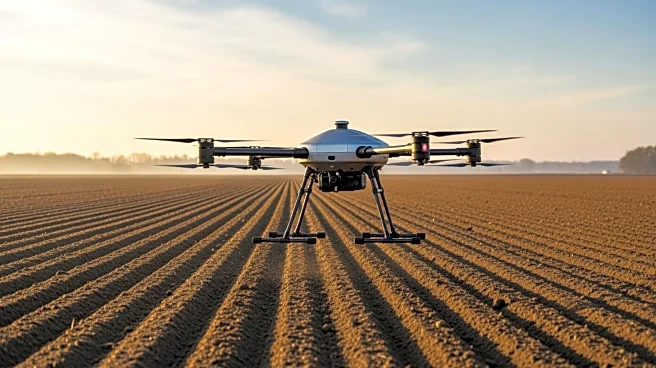
to reach USD 29.9 billion by 2032, growing at a compound annual growth rate (CAGR) of 34.9% from 2023 to 2032. Precision agriculture relies on real-time data to optimize crop management practices, and drones play a crucial role by providing detailed aerial images and data. These technologies help farmers monitor crop health, detect pests, and evaluate soil conditions, thereby improving agricultural efficiency. The growing global population and the consequent demand for increased food production are also contributing to the market's expansion.
Why It's Important?
The expansion of the agricultural drones market is significant for several reasons. Firstly, it represents a shift towards more technologically advanced farming practices, which can lead to increased agricultural productivity and sustainability. As global food demand rises, the ability to efficiently monitor and manage crops becomes crucial. Drones offer a solution by enabling farmers to quickly identify and address potential issues, thereby improving crop yields. Additionally, advancements in drone technology, such as the integration of artificial intelligence and automated flight systems, enhance the accuracy and efficiency of agricultural operations. This growth also reflects broader trends in digital farming and smart agriculture, which are essential for meeting future food security challenges.
What's Next?
The future of the agricultural drones market looks promising, with several emerging trends expected to drive further growth. These include the integration of artificial intelligence and machine learning in drone systems, the increasing adoption of autonomous agricultural drones, and the expansion of drone-based crop spraying technologies. Governments worldwide are likely to continue supporting smart farming initiatives, providing financial incentives and technological training to encourage the adoption of these technologies. As the market evolves, companies will likely invest in advanced drone technologies and data analytics platforms to maintain competitive positions, further fueling market growth.
Beyond the Headlines
Beyond the immediate market growth, the rise of agricultural drones could have broader implications for the agricultural sector. The increased use of drones may lead to a reduction in the environmental impact of farming by optimizing resource use and minimizing waste. Additionally, the data collected by drones can contribute to more informed decision-making and better risk management in agriculture. However, the widespread adoption of drone technology also raises questions about data privacy and the need for regulatory frameworks to ensure safe and ethical use.