







What's Happening?
Dick's Sporting Goods is shifting its retail media strategy to emphasize in-store experiences over traditional efficiency metrics. David Young, the company's VP of media network, highlights the importance of creating authentic connections with customers,
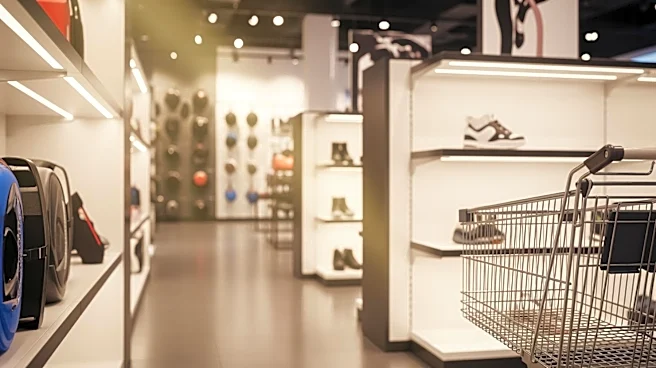
whom they refer to as 'athletes' rather than consumers. This approach involves leveraging the physical retail environment as a competitive advantage, using in-store experiences to engage customers in a more meaningful way. The strategy includes using RFID technology to measure product engagement and focusing on storytelling to enhance brand connection. This shift aims to move beyond traditional performance metrics like return on ad spend (ROAS) to broader business outcomes, including brand awareness and customer sentiment.
Why It's Important?
This strategic pivot by Dick's Sporting Goods underscores a broader trend in retail media where companies are recognizing the limitations of focusing solely on efficiency metrics. By prioritizing in-store experiences, Dick's aims to create a more holistic approach to customer engagement that could lead to stronger brand loyalty and increased sales. This move could influence other retailers to reconsider their strategies, potentially leading to a shift in how retail media is measured and valued. The emphasis on storytelling and physical interaction aligns with a growing consumer preference for personalized and immersive shopping experiences, which could drive significant changes in the retail landscape.
What's Next?
As Dick's Sporting Goods continues to develop its in-store experience strategy, the company may explore further integration of technology to enhance customer engagement. This could include expanding the use of AI to streamline operations and improve customer interactions. Additionally, the retail industry may see a push towards standardizing measurement frameworks to better assess the impact of these experiential strategies. Other retailers might follow suit, adopting similar approaches to differentiate themselves in a competitive market. The success of this strategy could lead to a reevaluation of how retail media is utilized across the industry.