



What's Happening?
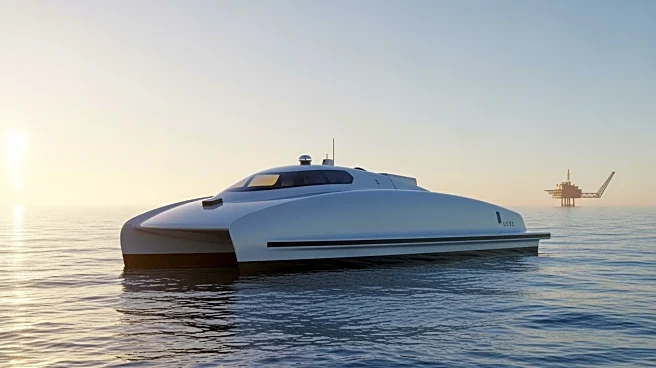
Exail has announced the first sale of its DriX H-9 Uncrewed Surface Vessel (USV) to a European client for use in civil offshore infrastructure survey operations. The DriX H-9 is equipped with a comprehensive geophysical sensor suite, including a Multibeam
Echosounder (MBES), Side Scan Sonar (SSS), Sub-Bottom Profiler (SBP), and a magnetometer. These technologies enable the vessel to conduct complex data collection tasks while reducing operational costs and environmental impact compared to traditional crewed vessels. The DriX series, which includes the H-8, H-9, and O-16 models, is designed to meet the growing demand for precision and efficiency in the offshore market. The H-9 model is specifically engineered for over-the-horizon missions, capable of maintaining operations for up to 20 days at sea.
Why It's Important?
The sale of the DriX H-9 USV marks a significant milestone for Exail's maritime autonomy division, as it represents the growing adoption of autonomous long-endurance platforms by European survey firms for large-scale infrastructure projects. This development highlights the increasing reliance on unmanned systems in the offshore industry, driven by the need for cost-effective and environmentally friendly solutions. The use of USVs like the DriX H-9 can significantly lower operational costs by reducing the need for crewed vessels, which are typically more expensive to operate. Additionally, the environmental benefits of using autonomous vessels align with global efforts to minimize the ecological footprint of industrial operations.
What's Next?
As European survey firms begin to adopt the DriX H-9 and similar autonomous platforms, it is likely that more companies will follow suit, leading to a broader shift towards unmanned systems in the offshore industry. This trend could drive further innovation in marine robotics and autonomy, as companies seek to enhance the capabilities and efficiency of their USVs. Additionally, regulatory bodies may need to adapt to the increasing presence of autonomous vessels in international waters, potentially leading to new guidelines and standards for their operation.