


What's Happening?
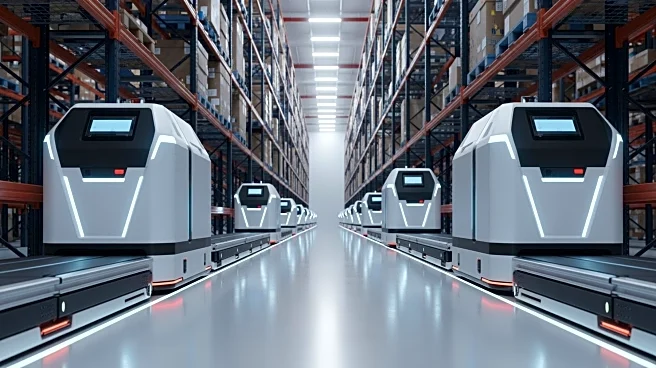
Decathlon, the world's largest sporting goods retailer, has reported significant productivity improvements at seven of its European warehouses through the use of Exotec's robotic systems. These robots, known as Skypods, are designed to sort and pack items
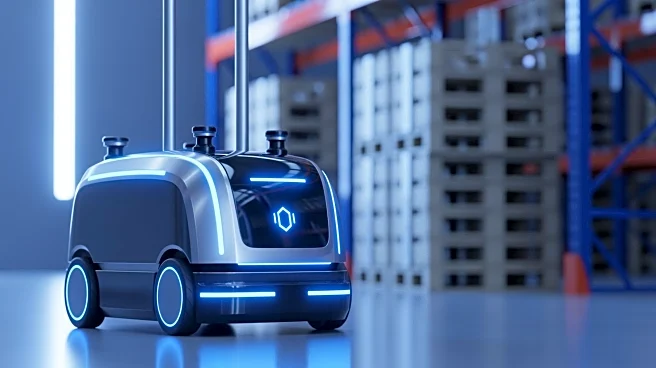
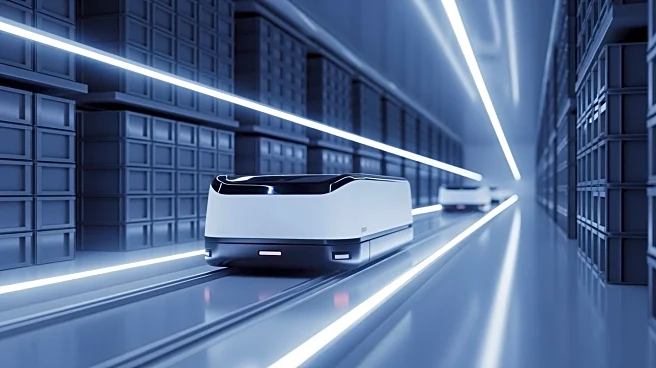
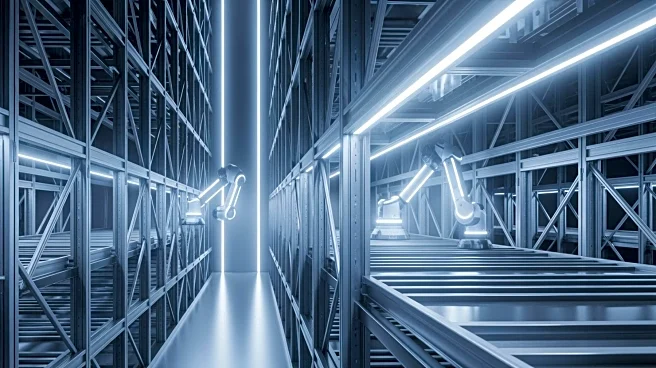
for distribution to brick-and-mortar stores. The implementation of these robots has allowed Decathlon to double the number of orders prepared at its Portugal warehouse, increasing from 57,000 to 114,000. The Skypods, which are not humanoid but rather wheeled robots, can move vertically and retrieve items from storage racks up to 46 feet high. This system reduces the warehouse footprint and increases the density of stored items, allowing for more efficient use of space. As a result, the walking distance for human workers has significantly decreased, improving working conditions and safety.
Why It's Important?
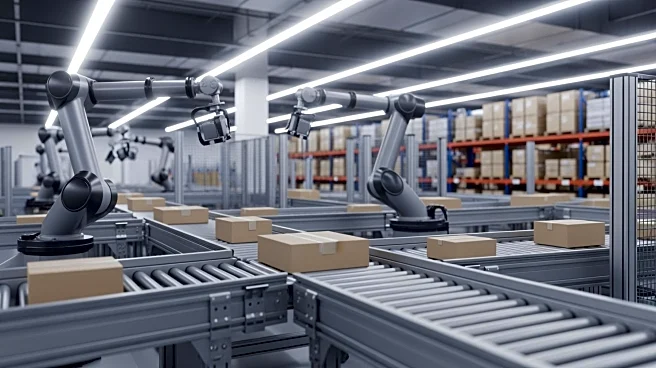
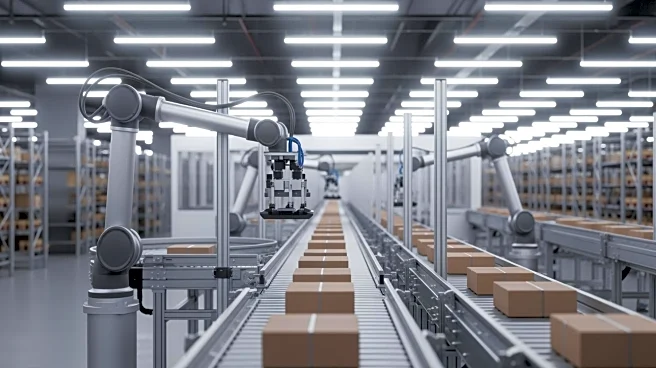
The integration of Exotec's robotic systems in Decathlon's warehouses highlights a broader trend in the retail industry towards automation to address labor shortages and increase efficiency. By reducing the need for human workers to perform repetitive tasks, companies can reassign employees to more complex roles, potentially leading to higher job satisfaction and safety. This shift also allows retailers to handle increased order volumes without expanding their physical warehouse space, which can be a significant cost-saving measure. The success of this implementation could encourage other retailers to adopt similar technologies, further transforming the logistics and supply chain sectors.
What's Next?
As Decathlon continues to expand its use of robotic systems, other companies may follow suit, leading to a more widespread adoption of automation in warehouses. This could result in a reevaluation of workforce roles and the development of new skills among employees. Additionally, the increased efficiency and safety in warehouses may prompt regulatory bodies to update guidelines and standards for automated systems. The ongoing advancements in AI and robotics could also lead to further innovations in warehouse technology, potentially introducing more sophisticated systems that can handle a wider range of tasks.