



What's Happening?
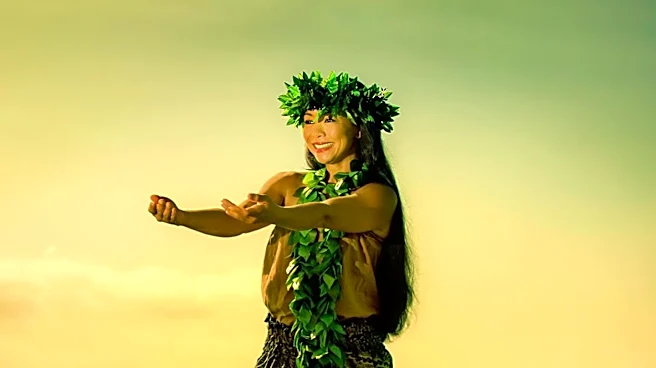
The Merrie Monarch Festival, a significant cultural event in Hawaii, has seen a notable increase in male participation in its hula competitions. Originally established in 1963 to boost business on Hawaii Island, the festival introduced a hula competition in 1971,
initially allowing only female dancers. Men were permitted to participate starting in 1976, and since then, the number of male dancers, or kâne, has grown significantly. This year, the festival featured 11 male groups, a substantial increase from the three groups that participated in 1976. The festival's growth in male participation reflects a broader cultural renaissance and a renewed interest in Hawaiian identity and traditions. Notable figures like Robert Cazimero, a kumu hula, have been instrumental in promoting male hula dancing, despite past stigmas associated with it.
Why It's Important?
The increased participation of men in the Merrie Monarch Festival's hula competitions highlights a significant cultural shift in Hawaii. This change not only reflects a growing acceptance and celebration of male hula dancers but also underscores a broader revival of Hawaiian cultural practices and identity. The festival serves as a platform for challenging and overcoming historical stigmas associated with male hula dancing, which were influenced by Western perceptions. This cultural renaissance is crucial for preserving and promoting Hawaiian traditions, offering a sense of identity and pride for the local community. Additionally, the festival's success in attracting male participants can inspire other cultural events to embrace inclusivity and diversity, further enriching Hawaii's cultural landscape.
What's Next?
As the Merrie Monarch Festival continues to grow, it is likely to further influence the perception and acceptance of male hula dancers both within Hawaii and beyond. The festival's success in promoting male participation could encourage more men to engage in hula, potentially leading to the establishment of more male hula schools and groups. This trend may also inspire similar cultural events to adopt inclusive practices, fostering a broader appreciation for diverse cultural expressions. The ongoing documentation and celebration of male hula dancers' contributions, such as through documentaries and media coverage, will likely continue to play a vital role in shaping public perception and encouraging participation.
Beyond the Headlines
The resurgence of male participation in hula at the Merrie Monarch Festival also raises important discussions about gender roles and cultural identity. By challenging traditional gender norms, the festival promotes a more inclusive understanding of cultural practices, allowing individuals to express their heritage without fear of stigma. This shift not only benefits the participants but also enriches the cultural tapestry of Hawaii, offering a more comprehensive representation of its traditions. Furthermore, the festival's emphasis on inclusivity and cultural revival can serve as a model for other communities seeking to preserve and celebrate their unique cultural identities in a modern context.