

What's Happening?
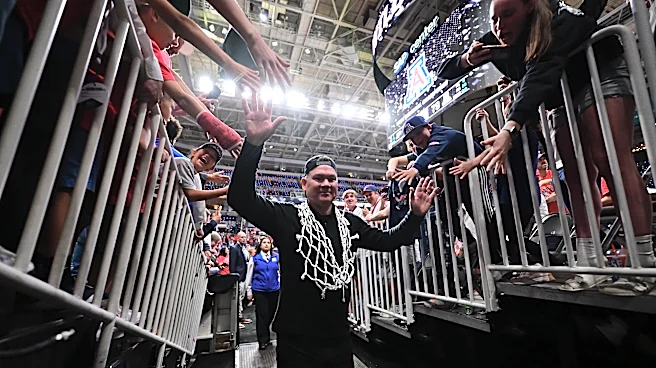
The Arizona Wildcats have reached the Final Four in the 2026 NCAA Tournament, but the spotlight is on Bryce James, son of NBA legend LeBron James. Despite being a freshman on the team, Bryce has not played in any games this season. His presence at the tournament
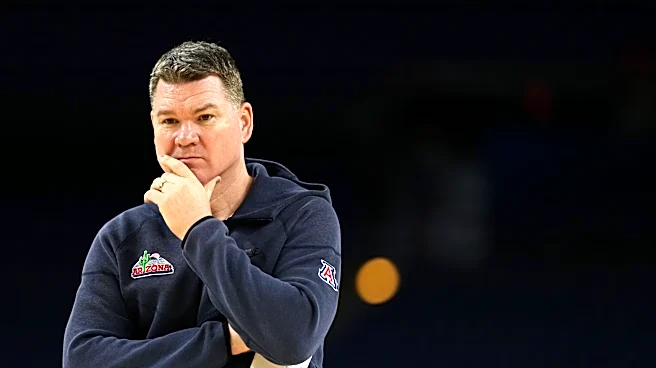
has been marked by limited media access, reportedly orchestrated by Klutch Sports, the agency representing him and his family. Bryce was shielded from interviews at the Final Four, with a bodyguard present to prevent media engagement. Arizona's head coach, Tommy Lloyd, praised Bryce's progress, noting significant improvements in his skills and physical development over recent months. The situation has sparked curiosity about Bryce's future in college basketball, especially given his brother Bronny's brief college career before joining the NBA.
Why It's Important?
The handling of Bryce James' media presence highlights the influence of sports agencies like Klutch Sports in managing young athletes' public exposure. This approach may set a precedent for how high-profile athletes' children are introduced to collegiate sports. The decision to limit Bryce's media interactions could impact his visibility and marketability, crucial factors for future professional opportunities. Additionally, it raises questions about the balance between protecting young athletes and providing them with necessary exposure. The situation also underscores the challenges faced by athletes with famous parents, as they navigate expectations and media scrutiny.
What's Next?
Looking ahead, the focus will be on how Bryce James' college basketball career unfolds. With offers from major programs like Ohio State and Duquesne, his choice to play for Arizona suggests a strategic decision influenced by his family's and agency's guidance. The Wildcats' strong program may offer Bryce valuable development opportunities, but securing playing time could be challenging. Observers will watch how Klutch Sports continues to manage his career, especially if he aims for the NBA. The broader implications for NCAA policies on media access and athlete representation may also be explored.