



What's Happening?
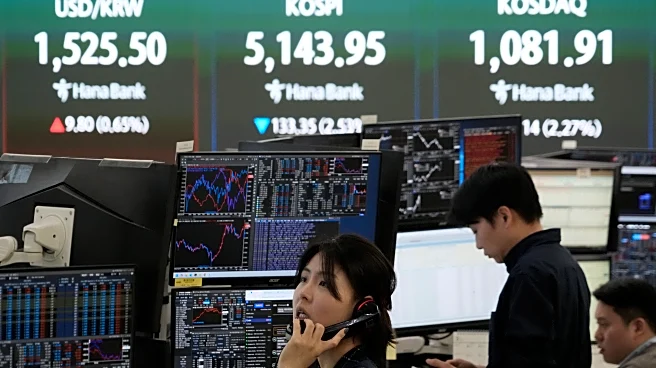
The U.S. financial markets are experiencing significant fluctuations due to the ongoing conflict involving Iran. Oil prices have surged, with Brent crude futures rising by 2.4% to $115.50 a barrel, marking a record monthly gain. This increase is attributed
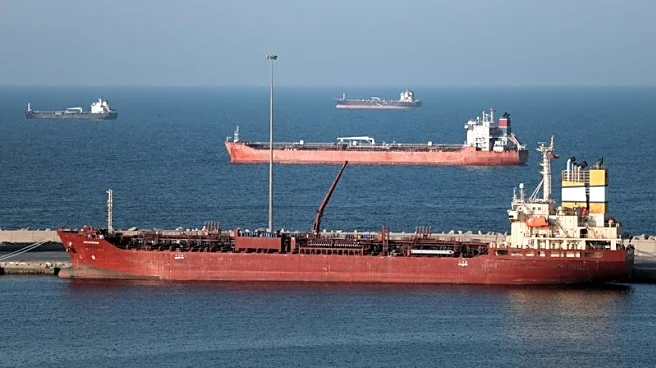
to Iran's effective closure of the Strait of Hormuz, a critical passage for global oil supply. The conflict began with coordinated strikes by the U.S. and Israel against Iran, leading to heightened tensions and market volatility. Despite the turmoil, U.S. stock futures have risen, with the S&P 500 and Nasdaq e-minis both up by around 1%. The situation is further complicated by the end-of-month portfolio rebalancing by large asset managers.
Why It's Important?
The closure of the Strait of Hormuz has significant implications for global energy markets, as it is a vital route for oil transportation. The resulting oil price surge is contributing to inflationary pressures, particularly in the eurozone, where inflation has exceeded the European Central Bank's target. The conflict and its impact on energy prices are raising concerns about potential economic slowdowns, with the risk of a recession looming if the strait remains closed. The situation underscores the interconnectedness of geopolitical events and global economic stability, affecting everything from consumer prices to investment strategies.
What's Next?
The European Union's energy chief has advised governments to prepare for prolonged disruptions in energy markets. An emergency meeting is scheduled to address these challenges. Meanwhile, financial markets are closely monitoring the U.S. administration's stance, as President Trump has indicated a willingness to end military actions even if the strait remains closed. The ongoing developments will likely influence future market movements and economic forecasts, with stakeholders across industries bracing for potential long-term impacts.