






What's Happening?
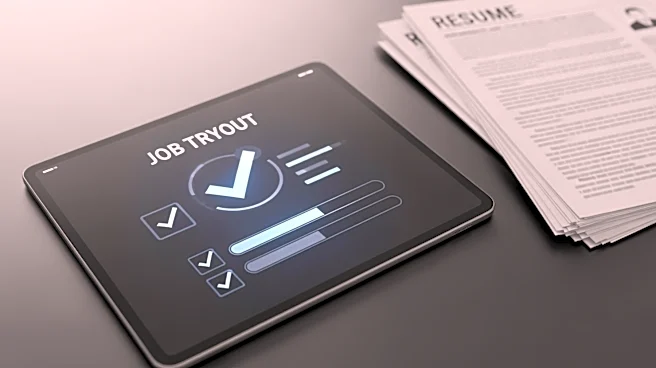
The job market is experiencing a significant shift as companies move away from traditional resumes in favor of job tryouts and live tests. This change is driven by the influx of AI-generated resumes and cover letters, which have made it challenging for
hiring managers to differentiate candidates. As a result, companies are increasingly relying on practical demonstrations of skills to assess candidates' technical abilities and collaboration skills. This trend is particularly evident in industries where AI tools are becoming integral to job performance, with some companies even tying performance bonuses to AI usage. The shift allows employers to evaluate candidates in real-world scenarios, while also giving job seekers a chance to understand the work environment and potential fit with the company.
Why It's Important?
This development highlights a broader trend in the job market where practical skills and real-world performance are becoming more valued than traditional paper qualifications. As AI continues to influence various sectors, the ability to effectively use these tools is becoming a critical skill. This shift could lead to a more dynamic and skills-oriented workforce, potentially benefiting industries that require hands-on expertise. However, it also poses challenges for job seekers who may need to adapt to new methods of showcasing their abilities. The emphasis on job tryouts could also lead to more equitable hiring practices, as it focuses on actual performance rather than potentially biased resume evaluations.
What's Next?
As this trend continues, job seekers may need to focus more on developing practical skills and gaining experience through internships or project-based work. Companies might also invest in creating more structured job tryout programs to streamline the hiring process. Additionally, educational institutions may need to adjust their curricula to better prepare students for these new hiring practices, emphasizing skills development and real-world applications. The shift could also prompt discussions around fair compensation for job tryouts and the potential for exploitation in unpaid trial periods.