






What's Happening?
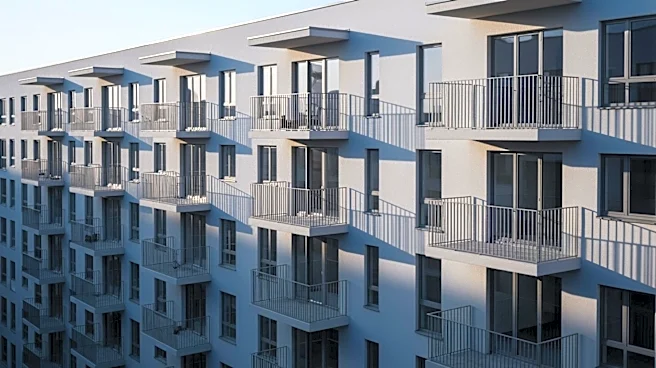
The U.S. multifamily housing market is experiencing a decline in rents, with median rents dropping by $29, or 1.7%, annually to $1,673 as of last month. This marks a 5.2% decrease from peak levels in August 2022, though rents remain about 18% higher than
in April 2019. According to Realtor.com, the decline is expected to continue as new multifamily projects accelerate. Despite a 30% quarterly drop in multifamily lending volumes in early 2026, the Mortgage Bankers Association reports that dollar volumes of multifamily loan production are 50% higher than a year ago. The National Association of Home Builders' Multifamily Production Index indicates a stable outlook for current production conditions, though sentiment is divided regarding new production opportunities and occupancy trends for existing units.
Why It's Important?
The decline in rents and the mixed outlook for the multifamily housing market have significant implications for renters and the real estate industry. For renters, the continued decrease in rents offers potential relief from the high costs experienced in recent years. For the real estate industry, the increase in multifamily loan production and the acceleration of new projects suggest a robust demand for housing, despite the challenges posed by higher financing costs. The tightening of credit spreads on multifamily mortgages indicates strong demand for commercial paper, which could support further investment in the sector. However, the split sentiment among developers and builders highlights uncertainties about the sustainability of current production rates and occupancy trends.
What's Next?
Looking ahead, the multifamily housing market is poised for continued changes. New projects are expected to keep downward pressure on rents into 2027, providing ongoing relief for renters. The increase in multifamily starts suggests a strong pipeline of new units, which could further influence market dynamics. However, the sustainability of current production rates remains uncertain, with some experts cautioning that they may not be maintained through 2027. The market will likely continue to adapt to evolving economic conditions, financing costs, and demand trends, with potential impacts on both renters and developers.