
What's Happening?
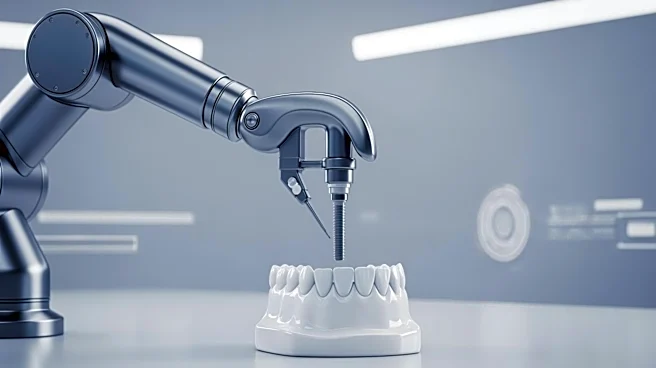
A Miami-based company has developed a robotic dental assistant designed to assist with dental implants at South Florida dental offices. This innovation aims to reduce the guesswork involved in dental procedures,
potentially improving accuracy and efficiency. The robotic assistant represents a significant advancement in dental technology, offering a new tool for dental professionals to enhance patient care. The development of this technology is part of a broader trend of integrating robotics into healthcare settings, where precision and reliability are crucial.
Why It's Important?
The introduction of robotic dental assistants could revolutionize the dental industry by providing more precise and consistent results in dental implant procedures. This technology may lead to reduced procedure times and improved patient outcomes, which could increase patient satisfaction and trust in dental services. Additionally, the use of robotics in healthcare settings can help address workforce shortages by automating routine tasks, allowing dental professionals to focus on more complex aspects of patient care. The broader adoption of such technology could also drive innovation in other areas of healthcare, promoting further advancements in medical robotics.
What's Next?
As robotic dental assistants become more integrated into dental practices, there may be increased interest from other healthcare sectors in adopting similar technologies. Dental professionals and clinics might begin to explore additional applications for robotics in dentistry, such as in orthodontics or oral surgery. Regulatory bodies may also need to establish guidelines and standards for the use of robotics in healthcare to ensure safety and efficacy. Furthermore, ongoing research and development could lead to enhancements in the capabilities of these robotic systems, expanding their use beyond dental implants.
Beyond the Headlines
The development of robotic dental assistants raises important ethical and legal considerations, such as the potential impact on employment in the dental industry and the need for clear regulations to govern their use. There may be concerns about the reliability of robotic systems and the extent to which they can replace human judgment in medical procedures. Additionally, the integration of robotics into healthcare settings could lead to shifts in educational requirements for dental professionals, who may need to acquire new skills to work alongside advanced technologies.