
What's Happening?
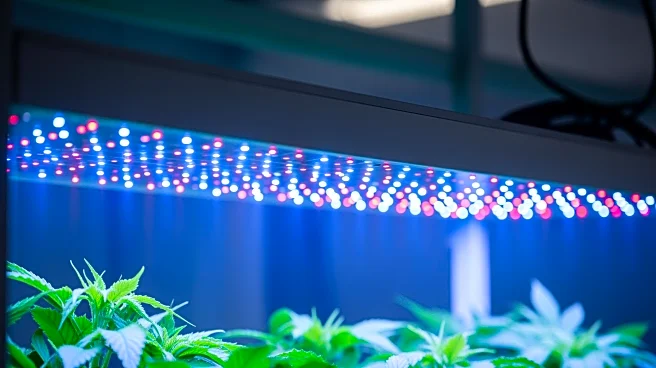
In November 2025, U.S. horticultural lighting manufacturers introduced next-generation full-spectrum LED grow lights with adaptive photon control. These advanced systems are designed to enhance crop yield
consistency and reduce energy consumption in commercial indoor farms. The development is part of a broader trend in the LED farming market, which is projected to grow at a compound annual growth rate (CAGR) of 11.12% from 2024 to 2031. The new LED systems aim to improve the efficiency of controlled-environment agriculture by optimizing light conditions for various crops, thereby supporting precision farming techniques. This innovation follows a series of strategic partnerships and technological advancements in the sector, including the collaboration between Cree LED and SANlight to develop high-efficiency horticultural LED lighting systems for vertical farms and greenhouses.
Why It's Important?
The introduction of these advanced LED grow lights is significant for the U.S. agricultural sector, particularly in the context of increasing demand for sustainable and efficient farming practices. By reducing energy consumption and enhancing crop yield consistency, these systems can lower operational costs for indoor farms, making them more competitive and environmentally friendly. This development is crucial as the U.S. seeks to expand its indoor farming capabilities to meet growing food demands and address challenges such as climate change and resource scarcity. The adoption of such technologies can also stimulate economic growth by creating new opportunities in the agri-tech industry and supporting the expansion of vertical and indoor farming operations.
What's Next?
As the LED farming market continues to grow, further advancements in lighting technology are expected. The integration of artificial intelligence and automated systems in LED grow lights could lead to even more precise control over farming conditions, enhancing crop quality and yield. Additionally, the expansion of production capacities for advanced LED systems will likely improve supply reliability, supporting the rapid growth of the indoor farming sector. Stakeholders, including agricultural businesses and policymakers, may focus on promoting these technologies to enhance food security and sustainability. Continued investment in research and development will be essential to maintain the momentum in this sector.