

What's Happening?
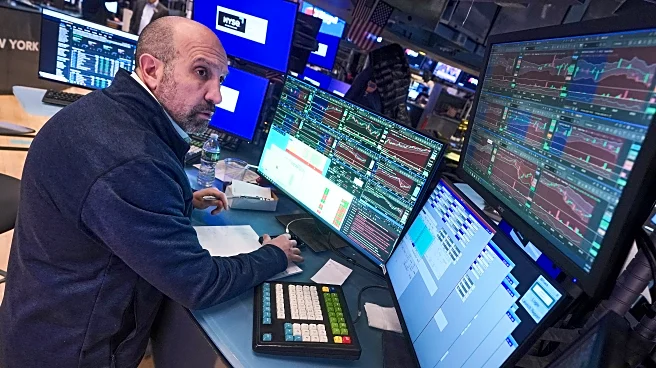
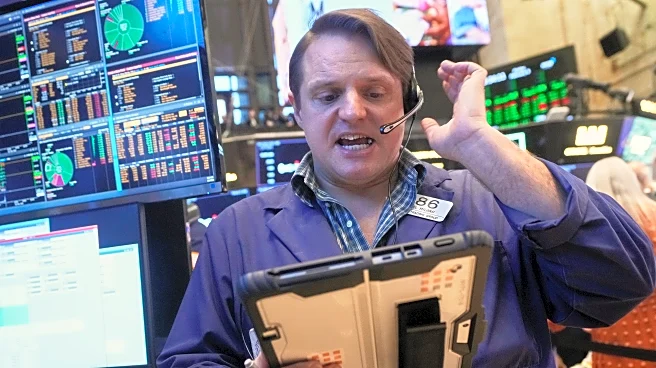
Procter & Gamble (P&G) experienced a decline in its stock price on December 19, 2025, closing at $144.46, down 0.73% from the previous day. This occurred despite a broader market rally, with the S&P 500, Nasdaq, and Dow all posting gains. The trading volume for P&G was notably high due to a major derivatives expiration session, known as 'triple/quadruple witching,' which typically increases trading activity. In after-hours trading, P&G's stock remained relatively stable, indicating no significant new developments affecting its immediate outlook. Key upcoming events for P&G include the announcement of its second-quarter FY2025/26 earnings discussion scheduled for January 22, 2026, and the signing of a lease for a new logistics and production
facility in Prague, set to begin operations in 2027.
Why It's Important?
The decline in P&G's stock price, despite a market rally, highlights investor caution towards consumer staples during periods of risk-on market behavior. The upcoming earnings discussion is crucial as it will provide insights into P&G's performance during the holiday quarter, a period where pricing and promotions can significantly impact margins. Additionally, the expansion in Prague underscores P&G's strategic focus on enhancing its supply chain capabilities and European distribution reach. Analysts are divided on P&G's prospects, with some upgrading their ratings based on an improving consumer backdrop and innovation, while others remain cautious due to macroeconomic uncertainties.
What's Next?
Investors will closely monitor P&G's earnings discussion on January 22, 2026, for updates on volume trends, pricing strategies, and innovation impacts. The market will also watch for any shifts in consumer behavior and macroeconomic conditions that could affect P&G's performance. The upcoming CEO transition on January 1, 2026, with Shailesh Jejurikar taking over as President and CEO, may also influence strategic priorities and investor sentiment. Additionally, the holiday-shortened trading week could lead to increased volatility and sensitivity to analyst notes and sector rotations.