






What's Happening?
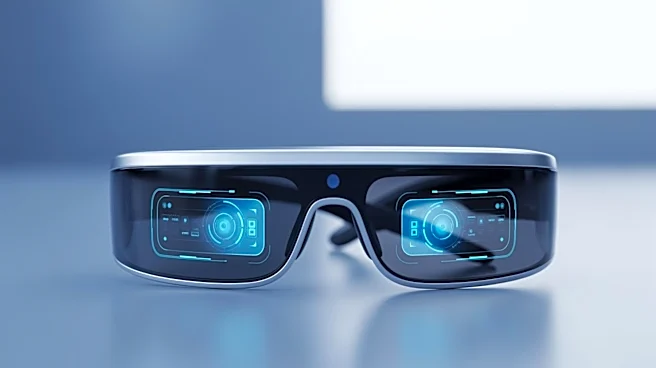
The year 2026 marks a significant shift in the augmented reality (AR) wearable market, with several companies unveiling new smart glasses designs. At the forefront are Google and Samsung, who showcased Android XR glasses at the Google I/O event, emphasizing
lightweight frames and audio-driven interactions. Warby Parker announced its Gemini AI Frames, set to launch in 2026, which aim to integrate AR with everyday prescription eyewear. Other notable entries include Gentle Monster's fashion-forward smart frames and Xreal's affordable AR options. These developments reflect a broader industry trend towards making AR wearables more accessible and appealing to mainstream consumers.
Why It's Important?
The introduction of these smart glasses represents a pivotal moment for the AR industry, as companies strive to overcome previous barriers related to aesthetics, cost, and functionality. By focusing on style and affordability, these new designs could broaden the appeal of AR wearables beyond tech enthusiasts to everyday users. This shift has the potential to drive significant growth in the AR market, which is projected to expand by 64.8% year-over-year in 2026. As AR technology becomes more integrated into daily life, it could transform how consumers interact with digital content, offering new opportunities for businesses and developers.
What's Next?
As these smart glasses move closer to retail availability, companies will likely focus on refining their designs and expanding distribution channels. The success of these products will depend on consumer adoption, which may be influenced by factors such as price, functionality, and compatibility with existing devices. Privacy concerns and the development of new applications will also play a critical role in shaping the future of AR wearables. As the market evolves, companies may explore partnerships and collaborations to enhance their offerings and capture a larger share of the growing AR market.