


What's Happening?
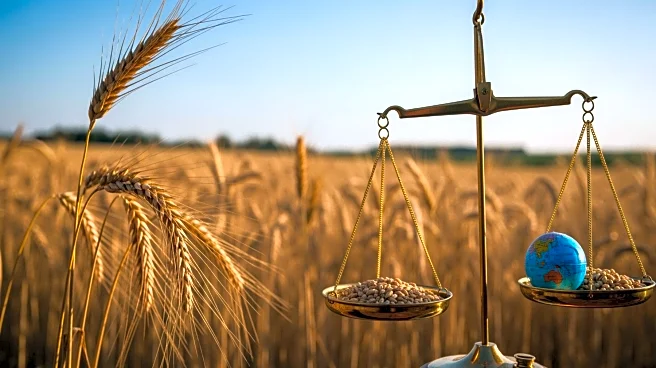
Corn prices are currently stagnant, as indicated by the recent January World Agricultural Supply and Demand Estimates (WASDE) report, which highlights that both domestic and global supplies are abundant. This situation has led to a 'just-in-time inventory approach' among end users, who are not in a rush to make large purchases. Consequently, corn farmers are facing the burden of storage costs as prices remain in a sideways pattern. To address this financial strain, farmers are exploring the option of selling call options against their unpriced inventory. This strategy involves selling someone the right to own futures at a designated price level, known as the strike price, and collecting a premium in return. The approach is seen as a way to potentially
generate revenue streams to help cover storage costs or challenge the market to move higher.
Why It's Important?
The decision to sell call options is significant for corn farmers as it offers a potential revenue stream in a market where prices are not favorable for immediate sales. This strategy allows farmers to benefit if the market rallies, as the unpriced inventory would increase in value. However, it also introduces additional risks, such as the possibility of margin calls if the market moves against the position. The approach underscores the financial pressures faced by farmers in managing storage costs and navigating market uncertainties. By selling call options, farmers can potentially offset some of these costs, but they must be prepared for the associated risks and ensure they have a comprehensive understanding of the strategy.
What's Next?
Farmers considering this strategy are advised to consult with market advisors to understand the implications fully and to tailor the approach to their specific operations. As the market remains dynamic, ongoing communication with advisors is crucial to making informed decisions. The outcome of this strategy will depend on market movements and the ability of farmers to manage the risks involved. If the market does not rally, the sold call options may expire without value, allowing farmers to keep the premium collected. However, if the market does rally, farmers must be prepared for the potential conversion of options into sold futures at the strike price.