
What's Happening?
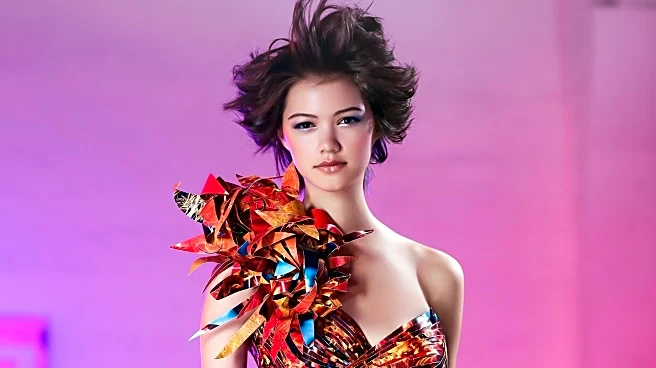
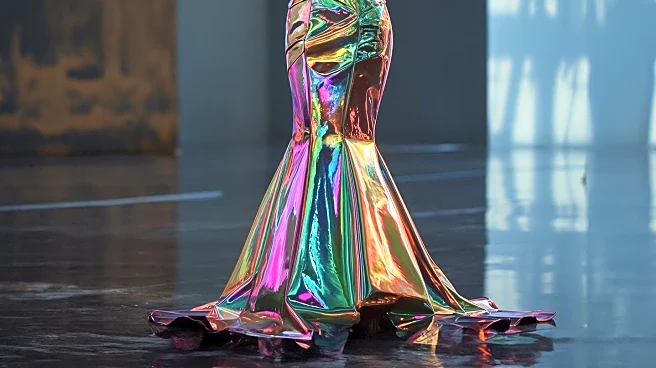
Maia Hirsch, a mechanical engineer and fashion designer, is set to present her innovative 'Blooming Dress' at New York Fashion Week 2026. The dress, which blooms into a flower with a simple handshake, is a testament to the fusion of technology and fashion. Hirsch, who is pursuing a PhD in robotics at Cornell University, has spent months perfecting her designs using advanced tools like 3D printers and laser cutters. Her work aims to challenge stereotypes in the STEM field by demonstrating that engineering and fashion can coexist. The 'Blooming Dress' and another creation, the 'Gazing Dress', which lights up in response to body movements, will be featured in the 'Future of Fashion' show.
Why It's Important?
Hirsch's work highlights the growing intersection between
technology and fashion, a trend that is gaining traction among Gen Z consumers who value individuality and innovation. By integrating robotics into fashion, Hirsch is not only pushing the boundaries of design but also advocating for greater female representation in STEM fields. Her efforts reflect a broader movement to break down gender barriers in traditionally male-dominated industries. This development could inspire more women to pursue careers in engineering and technology, potentially leading to increased diversity and innovation in these fields.
What's Next?
As Hirsch's designs gain visibility, they may attract interest from both the fashion and tech industries, potentially leading to collaborations that further explore the integration of technology in fashion. The success of her showcase could also encourage other designers to experiment with similar concepts, fostering a new wave of tech-infused fashion. Additionally, Hirsch's work may inspire educational institutions to support interdisciplinary programs that combine fashion and technology, preparing students for emerging career opportunities.
Beyond the Headlines
Hirsch's creations raise questions about the future of wearable technology and its implications for personal expression and identity. As fashion becomes more interactive and personalized, it may challenge traditional notions of clothing as merely functional or aesthetic. This shift could lead to new cultural norms around fashion and technology, influencing how people perceive and engage with both industries. Furthermore, the environmental impact of tech-infused fashion, including issues related to sustainability and electronic waste, may become a topic of discussion as the trend evolves.