



What's Happening?
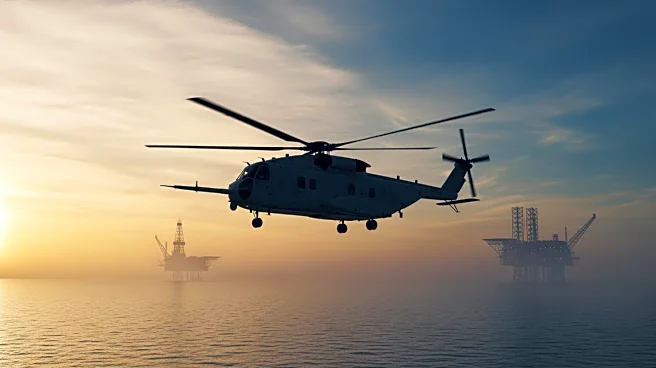
Airbus and Sikorsky are positioning their heavy commercial helicopters, the H225 and S-92 respectively, for a resurgence in the offshore market. This move comes as the industry sees a growing need for helicopters with longer-range capabilities to support
deepwater energy operations. The shift towards super-medium helicopters like the Airbus H175 and Leonardo AW189, which can carry up to 16 passengers, has not met the range requirements for longer offshore routes without compromising payload. Sikorsky is ramping up production of the S-92 to 12 aircraft per year and has moved final assembly to Owego, New York. Meanwhile, Airbus is working to restore the H225's offshore credentials, which were affected by a fatal accident in 2016. The H225 has been making a comeback, now used in oil and gas missions in several countries, and recently received approval from Shell for offshore operations.
Why It's Important?
The renewed focus on heavy helicopters by Airbus and Sikorsky is significant as it addresses the increasing demand for reliable and capable aircraft in the offshore energy sector. Rising energy prices, partly due to geopolitical tensions, have created opportunities for these manufacturers to secure new orders. The offshore market's reliance on helicopters for transportation to remote locations makes this development crucial for energy companies operating in regions like Brazil and Canada. The approval of the H225 by Shell, a major player in the energy sector, is a critical endorsement that could influence other companies to follow suit. This resurgence also highlights the ongoing competition in the helicopter market, with potential implications for the entry of new models like Bell's 525.
What's Next?
Sikorsky and Airbus are likely to continue their efforts to secure more orders for their heavy helicopters as the offshore market expands. Sikorsky's production increase and Airbus's efforts to improve the H225's safety reputation suggest a strategic push to capture market share. The potential certification of Bell's 525 could introduce new competition, prompting further innovation and marketing efforts from Airbus and Sikorsky. Additionally, the ongoing resolution of supply chain issues will be crucial for maintaining operational readiness and meeting the demands of energy companies.
Beyond the Headlines
The push for heavy helicopters in the offshore market also reflects broader trends in the aviation industry, such as the need for versatile aircraft capable of multiple missions. The adaptation of these helicopters for roles beyond offshore operations, like firefighting and search-and-rescue, indicates a shift towards multi-mission platforms. This diversification could provide new revenue streams for manufacturers and operators, while also addressing public safety needs. The industry's focus on safety and reliability, particularly in response to past accidents, underscores the importance of maintaining high standards to regain and retain market trust.