





What's Happening?
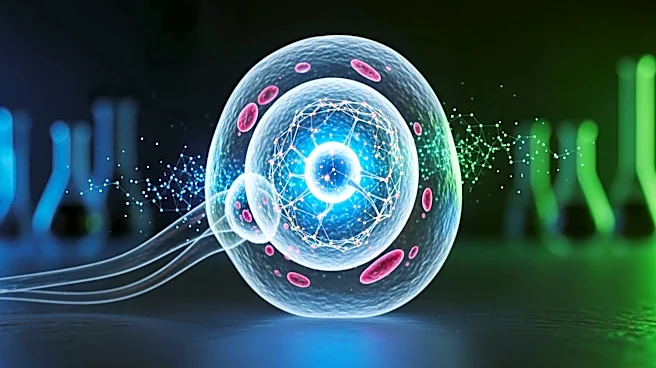
Saku Biosciences, a Los Angeles-based company, is revolutionizing the biomanufacturing industry with its innovative PicoShell technology. This approach involves encapsulating cells in tiny porous hydrogel particles, known as PicoShells, which allow nutrients
and oxygen to enter while waste exits, keeping each colony physically separated. This method aims to improve the high-throughput screening process by testing cells in environments that better mimic real-world fermentation conditions. The technology addresses the common issue of false positives and negatives in traditional screening methods, which often result in suboptimal strains for large-scale production. Saku Biosciences has secured its first venture capital funding from Big Idea Ventures and is moving from academic validation to early customer contracts. The company is working with notable institutions like Lawrence Berkeley National Laboratory to validate its technology.
Why It's Important?
The development of Saku Biosciences' PicoShell technology is significant for the biomanufacturing industry as it promises to enhance the efficiency and cost-effectiveness of producing various bioproducts, including dairy proteins and biopesticides. By improving the screening process, the technology can help companies identify better-performing strains that are more suitable for large-scale production, potentially reducing costs and increasing yields. This innovation could lead to more economically viable biomanufacturing processes, benefiting industries such as pharmaceuticals, agriculture, and food production. The ability to scale production more rapidly and efficiently could also accelerate the development and commercialization of new bioproducts, providing a competitive edge to companies that adopt this technology.
What's Next?
Saku Biosciences plans to continue refining its PicoShell technology and expand its customer base by entering into service and partnership agreements. The company aims to offer a two-pronged business model: a near-term service model where customers can either send strains to Saku or have the technology brought onsite, and a long-term model focused on developing off-the-shelf starter strains with better baseline economics. As Saku continues to validate its technology and secure more customer contracts, it may attract further investment and interest from various sectors, potentially leading to broader adoption of its innovative approach in the biomanufacturing industry.
Beyond the Headlines
The introduction of PicoShell technology by Saku Biosciences could have broader implications for the biomanufacturing industry, particularly in terms of sustainability and environmental impact. By optimizing the production process and reducing waste, this technology could contribute to more sustainable manufacturing practices. Additionally, the ability to use a wider array of cheaper feedstocks could lower the environmental footprint of biomanufacturing operations. As the industry continues to evolve, innovations like PicoShells may play a crucial role in addressing the challenges of scalability and cost-effectiveness, ultimately leading to more sustainable and efficient production methods.