





What's Happening?
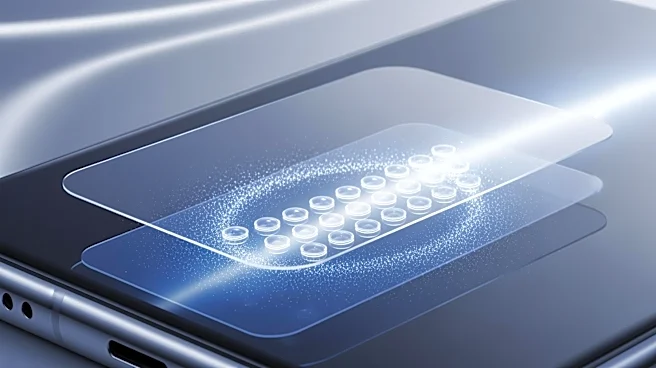
Metalenz, a Boston-based optics startup, has announced a breakthrough in under-display camera technology that could significantly reduce the size of camera cutouts on smartphones. This development was revealed at Display Week 2026. The company's optical
metasurfaces technology uses a flat-lens system that occupies less space than traditional multi-lens elements. This innovation allows for the integration of Face ID-like biometric authentication systems without the need for large notches or cutouts. Metalenz's technology is already in use in over 300 million consumer devices, replacing traditional optics in time-of-flight sensors. The company has also developed Polar ID, a facial authentication platform that uses polarization data to distinguish real faces from 3D masks, offering enhanced security over existing systems.
Why It's Important?
The advancement by Metalenz could revolutionize smartphone design by eliminating the need for large camera notches, leading to more aesthetically pleasing and functional devices. This technology not only enhances the visual appeal of smartphones but also improves security through advanced facial recognition capabilities. The ability to integrate such systems under the display could set a new standard in the industry, potentially influencing major smartphone manufacturers to adopt similar technologies. This could lead to a shift in consumer expectations and drive innovation in biometric security features.
What's Next?
As Metalenz's technology gains traction, it is likely that major smartphone manufacturers will explore partnerships or develop similar technologies to remain competitive. The adoption of under-display biometric systems could become a key selling point for new devices. Additionally, the enhanced security features provided by Polar ID could lead to broader applications beyond smartphones, such as in secure access systems and identity verification processes. The industry may see increased investment in research and development to further refine and expand the capabilities of under-display technologies.