







What's Happening?
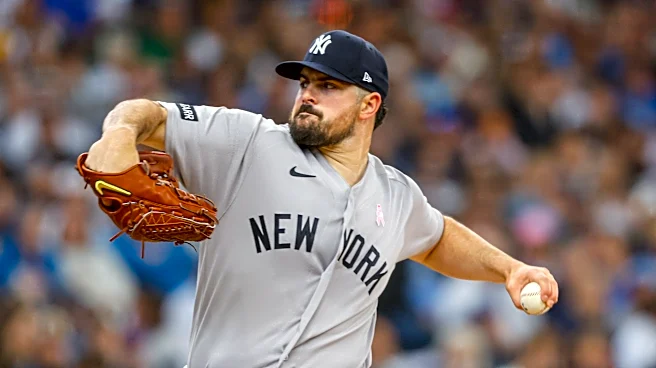
In a recent MLB game, the New York Yankees faced off against the Baltimore Orioles. Yankees manager Aaron Boone made a strategic decision to bring in reliever Brent Headrick in the seventh inning after starting pitcher Ryan Weathers lost his no-hitter.
This move, however, did not go as planned. Coby Mayo, a late addition to the Orioles lineup, capitalized on this change by hitting a decisive three-run homer off Headrick, leading the Orioles to a 3-2 victory. Despite the Yankees' initial lead, provided by Ben Rice's two-run home run, the team could not maintain their advantage. The Orioles, who had been struggling with only three hits, managed to secure their second consecutive win, marking a significant turnaround after a previous four-game sweep by the Yankees.
Why It's Important?
This game highlights the critical impact of managerial decisions in baseball, particularly in high-stakes situations. Aaron Boone's choice to replace Weathers, who was performing well, with Headrick, ultimately shifted the game's momentum in favor of the Orioles. This outcome underscores the importance of timing and player selection in maintaining a lead. For the Yankees, this loss extends their losing streak to four games, potentially affecting team morale and standings. Conversely, the Orioles' victory could serve as a morale booster, helping them recover from a challenging stretch of games. The result also emphasizes the unpredictable nature of baseball, where a single play can alter the course of a game.