






What's Happening?
Astronauts aboard the Artemis II mission have been experiencing unique sleeping conditions in space, which may offer insights into improving sleep quality on Earth. The crew, including Commander Reid Wiseman and astronaut Christina Koch, have been sleeping in microgravity,
which allows for a weightless experience. This environment decompresses the spine, relieves pressure on the back and joints, and promotes better blood circulation, leading to deeper and more restful sleep. The astronauts have adapted to sleeping in various positions, such as upside down or in nooks within the spacecraft, and have reported enjoying these non-traditional arrangements. The tradition of waking up to music from a playlist compiled by the crew continues, adding a personal touch to their routine.
Why It's Important?
The sleeping conditions experienced by astronauts in space could have significant implications for improving sleep quality on Earth. The concept of 'zero gravity sleeping' can be simulated by elevating the head and knees above the heart, which helps align the spine neutrally and relaxes muscles. This position reduces pressure on the heart and opens airways, potentially alleviating issues like snoring and acid reflux. By reducing the body's weight pressure on itself, individuals may experience less tossing and turning, leading to a more comfortable and uninterrupted sleep. These insights could benefit those suffering from back pain or sleep disorders, offering a simple yet effective method to enhance sleep quality without the need for specialized equipment.
What's Next?
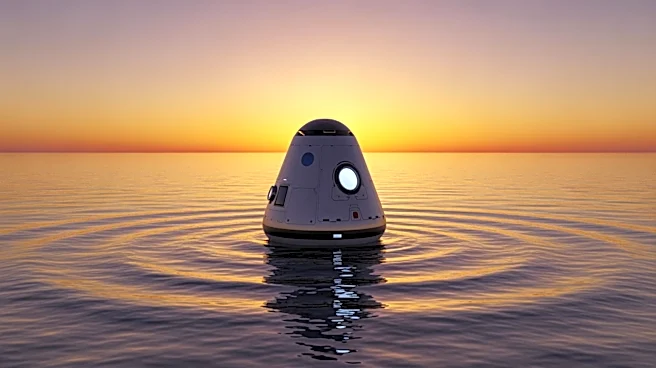
As the Artemis II crew returns to Earth, further studies and experiments could be conducted to explore the benefits of zero gravity sleeping positions for the general population. Sleep researchers and healthcare professionals might investigate how these findings can be applied in clinical settings or incorporated into sleep therapy programs. Additionally, the aerospace industry could consider designing sleep environments that mimic the benefits of microgravity for long-duration space missions, potentially improving astronauts' well-being and performance during extended stays in space.
Beyond the Headlines
The exploration of astronaut sleeping habits highlights the broader potential of space research to inform and improve everyday life on Earth. This development underscores the interconnectedness of space exploration and terrestrial health advancements, suggesting that innovations in one field can lead to breakthroughs in another. The cultural fascination with space and its influence on lifestyle trends may also grow, as people seek to incorporate elements of astronaut life into their routines for health and wellness benefits.