







What's Happening?
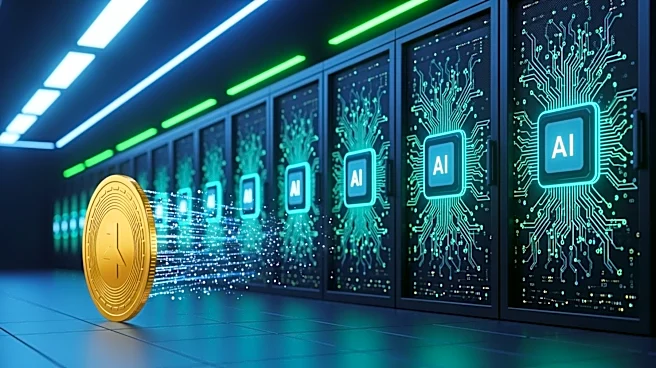
TeraWulf, a mining company, reported that its revenue from artificial intelligence (AI) services nearly doubled its earnings from Bitcoin mining in the first quarter. The company generated $34 million in revenue, with $21 million coming from high-performance
computing services, while digital asset mining accounted for $13 million. TeraWulf has been diversifying into the AI sector, signing a 10-year contract with Fluidstack, supported by Google, to provide 250 MW of computing power. The company is repurposing its Bitcoin mining infrastructure to support more valuable computing tasks, reflecting a strategic shift towards long-term computing infrastructure.
Why It's Important?
TeraWulf's shift from Bitcoin mining to AI services highlights a broader trend in the tech industry, where companies are seeking more sustainable and profitable ventures. The move could influence other mining companies to diversify their operations, potentially reducing the environmental impact associated with cryptocurrency mining. This transition also underscores the growing demand for AI infrastructure, which is becoming a critical component of modern technology ecosystems. The financial success of TeraWulf's AI services may encourage further investment in AI technologies, driving innovation and economic growth in the sector.
What's Next?
TeraWulf plans to continue expanding its AI infrastructure, with further data center expansions scheduled to begin operations soon. The company is likely to focus on enhancing its computing capabilities to meet the increasing demand for AI services. Additionally, TeraWulf's strategic partnerships, such as the one with Fluidstack, may lead to further collaborations with tech giants, potentially boosting its market position. The company's success could prompt other firms to explore similar diversification strategies, reshaping the landscape of the tech and mining industries.
Beyond the Headlines
The transition from Bitcoin mining to AI services raises questions about the future of cryptocurrency mining and its sustainability. As more companies pivot towards AI, there may be increased scrutiny on the environmental impact of mining operations. This shift also highlights the evolving nature of the tech industry, where adaptability and innovation are key to staying competitive. The ethical implications of AI development, including data privacy and algorithmic bias, will continue to be important considerations as the industry grows.