



What's Happening?
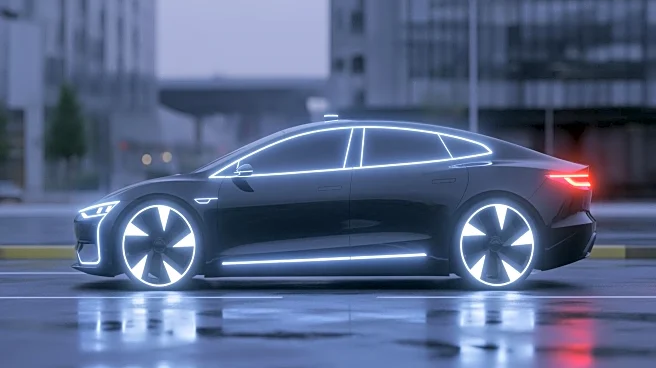
Tesla has initiated a new phase in its autonomous vehicle program by launching robotaxi rides in Austin, Texas, without a human safety driver present in the vehicle. This development was announced by CEO Elon Musk on his social media platform, X, where he congratulated the Tesla AI team for this milestone. The service, which began in a limited capacity last June with a safety operator in the front passenger seat, is now expanding to include fully driverless rides. Initially, these rides were offered to influencers and select customers. As of December, Tesla began testing these robotaxis without a safety driver, marking a significant step towards fully autonomous operations. However, not all vehicles in Tesla's Austin fleet will be driverless immediately;
the company plans to gradually increase the number of unsupervised vehicles over time.
Why It's Important?
The launch of Tesla's driverless robotaxi service in Austin represents a critical advancement in the field of autonomous vehicles, potentially setting a new standard for the industry. This move could significantly impact the rideshare market by reducing operational costs associated with human drivers, thereby offering competitive pricing. It also underscores Tesla's commitment to advancing artificial intelligence and autonomous technology, which could lead to broader applications beyond transportation. The success of this initiative could influence regulatory frameworks and public acceptance of driverless technology, potentially accelerating the adoption of autonomous vehicles across the U.S. and globally.
What's Next?
Tesla plans to gradually increase the number of fully autonomous vehicles in its Austin fleet, with a mix of supervised and unsupervised robotaxis initially. The company is likely to monitor the performance and safety of these vehicles closely, which could inform future deployments in other cities. Additionally, Tesla's recruitment of engineers to further develop its AI capabilities suggests ongoing innovation and potential expansion of its autonomous services. Stakeholders, including regulatory bodies and competitors, will be watching closely to assess the implications of this development on the broader transportation industry.