



What's Happening?
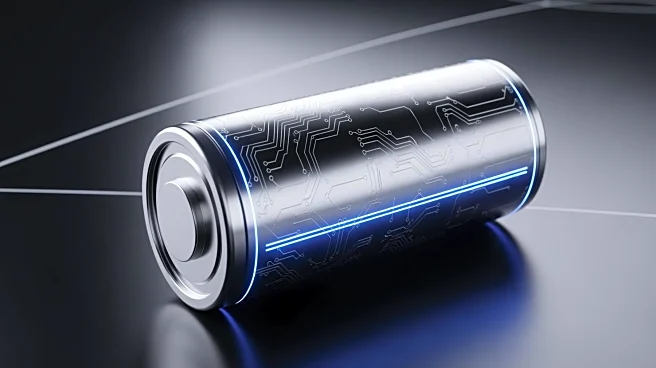
A new self-assembling material has been developed to improve the recycling process of lithium-ion batteries, which are increasingly used in electric vehicles. This material, detailed in the journal Nature Chemistry, functions as an ion-conducting component
in solid-state battery cells and can be separated into its molecular components using an organic solvent. This innovation aims to simplify battery disassembly and enhance material recovery. Traditional recycling methods involve mechanical shredding and chemical treatments, which are energy-intensive and produce mixed material streams requiring complex separation. The new material, based on aramid amphiphiles, forms nanoribbons that facilitate lithium-ion transport and can be processed into a solid-state electrolyte layer. This design-for-recycling approach reduces reliance on energy-intensive processes and allows for cleaner recovery of battery components.
Why It's Important?
The development of this recyclable material is significant as it addresses the growing challenge of managing end-of-life lithium-ion batteries, a byproduct of the increasing adoption of electric vehicles. Efficient recycling of these batteries is crucial for resource security, as it can mitigate raw material supply risks and reduce dependency on primary mining. By improving the recovery of lithium and other critical materials, this innovation could stabilize supply chains and decrease exposure to price volatility. Additionally, integrating recyclability at the material design stage represents a strategic advancement in sustainable manufacturing practices, potentially influencing future battery technologies and recycling standards.
What's Next?
Further research is needed to optimize the ionic conductivity and electrochemical performance of the new material. The research team is exploring partial integration of the self-assembling material into multi-layer electrolyte systems and assessing its compatibility with emerging battery chemistries. As the technology develops, it could lead to more efficient recycling processes and influence policy and industry standards related to battery disposal and resource management. Stakeholders in the electric vehicle and battery manufacturing sectors may need to adapt to these advancements to maintain competitiveness and sustainability.
Beyond the Headlines
This development highlights the broader trend towards circular economy practices, where products are designed with their end-of-life in mind. By focusing on recyclability from the outset, manufacturers can reduce environmental impact and enhance resource efficiency. This approach not only benefits the environment but also offers economic advantages by reducing waste and lowering production costs. As industries increasingly adopt such practices, there could be a shift in consumer expectations and regulatory frameworks, promoting more sustainable consumption and production patterns.