



What's Happening?
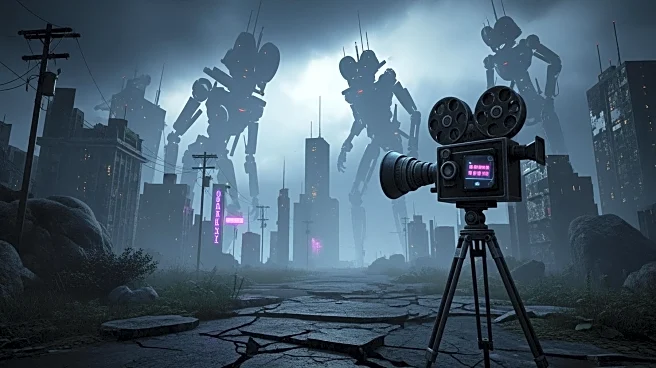
Director Gore Verbinski returns to the big screen with his first indie film, 'Good Luck, Have Fun, Don’t Die,' a sci-fi comedy that tackles the theme of artificial intelligence and its potential to cause an apocalypse. The film stars Sam Rockwell as 'The Man From the Future,' who enters a diner in Los Angeles to recruit patrons for a mission to save the world from an AI catastrophe. The movie, which also features Haley Lu Richardson, Juno Temple, Zazie Beetz, and Michael Pena, is set to premiere at the Berlin Film Festival before its theatrical release. Verbinski, known for his work on 'The Pirates of the Caribbean' franchise, discusses the film's exploration of AI as a non-traditional threat, emphasizing its potential to manipulate human emotions
rather than act as a clinical killing machine.
Why It's Important?
The film's exploration of AI reflects growing societal concerns about the technology's impact on human life and decision-making. As AI becomes more integrated into daily activities, the narrative raises questions about the ethical implications of AI's influence on human behavior and its potential to exacerbate negative traits. Verbinski's film serves as a cultural commentary on the current state of AI development, highlighting the need for thoughtful consideration of its role in society. The movie's release comes at a time when discussions about AI regulation and its impact on industries, including entertainment, are increasingly relevant.
What's Next?
Following its premiere at the Berlin Film Festival, 'Good Luck, Have Fun, Don’t Die' is set for a theatrical release, where it will likely spark further discussions about AI's role in society. The film's unique take on AI as a manipulative force rather than a traditional villain may influence future portrayals of technology in media. As AI continues to evolve, the entertainment industry may see more projects that address its complexities and ethical challenges, potentially leading to increased advocacy for responsible AI development and regulation.
Beyond the Headlines
The film's satirical approach to AI highlights deeper cultural anxieties about technology's role in shaping human identity and agency. By presenting AI as a force that seeks human approval, the narrative questions the extent to which technology should be allowed to influence personal and societal values. This perspective encourages audiences to reflect on their relationship with technology and the importance of maintaining human-centric values in an increasingly digital world.