



What's Happening?
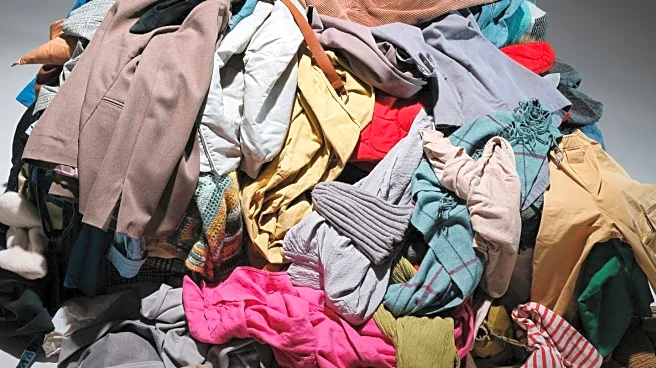
A recent study highlights the complex and troubling reality behind clothing donations to charity. While many believe that donated clothes are directly used by those in need, the truth is that a significant portion of these clothes are not sold locally
due to oversupply. Instead, they are often shipped overseas, contributing to global waste. The study, conducted in cities like Austin, Toronto, and Melbourne, found that the volume of donated clothes far exceeds local demand, leading to massive exports. This practice shifts the waste problem rather than solving it, as many of these clothes end up in landfills in other countries.
Why It's Important?
The findings underscore a significant issue in the global textile industry: overconsumption and oversupply. The ease of purchasing cheap clothing has led to a cycle of buying and discarding, which overwhelms charity organizations and contributes to environmental degradation. This situation highlights the need for systemic changes in how textiles are managed, both at the city level and within the fashion industry. By treating textiles as waste rather than a charity issue, cities can develop better systems for managing clothing waste, potentially reducing the environmental impact and supporting local economies.
What's Next?
Cities are encouraged to implement systems for local collection, sorting, and processing of old clothes to reduce reliance on exports. Initiatives such as repair services, clothing swaps, and promoting sustainable fashion alternatives could help mitigate the issue. Additionally, limiting fast fashion advertising and supporting businesses focused on reuse and repair could shift consumer behavior towards more sustainable practices. These changes require collaboration between governments, businesses, and consumers to effectively address the root causes of textile waste.