






What's Happening?
The U.S. Treasury market is indicating that current interest rates may not be sufficient, as yields on two-year notes have reached their highest level in over a year. This development follows a series of economic data releases that have led traders to
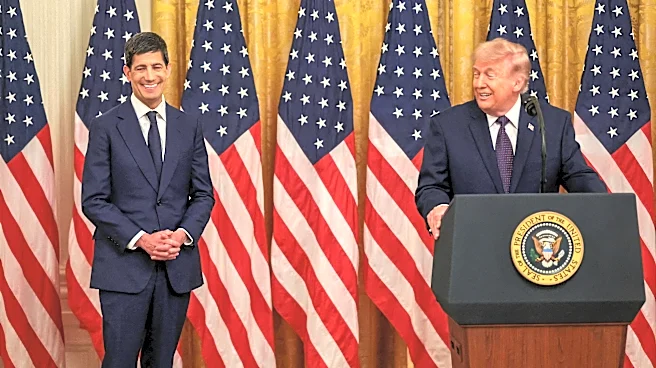
anticipate a potential quarter-point rate hike by October. The two-year yield is currently around 4.15%, surpassing the Federal Reserve's policy band of 3.5% to 3.75%. This divergence began in March and has been exacerbated by recent job growth figures that exceeded expectations, suggesting that higher rates may be necessary to control inflation and prevent an economic overheating driven by increased artificial intelligence spending. Kevin Warsh, the new chairman of the Federal Reserve, is set to address these concerns in his upcoming meeting and press conference.
Why It's Important?
The potential for higher interest rates has significant implications for the U.S. economy. If the Federal Reserve decides to increase rates, it could impact borrowing costs for consumers and businesses, potentially slowing economic growth. However, failing to address inflationary pressures could lead to an overheated economy, particularly with the rapid expansion of artificial intelligence investments. The decision on interest rates will be closely watched by investors and policymakers, as it will influence financial markets and economic stability. The Federal Reserve's approach will also signal its stance on balancing economic growth with inflation control, affecting confidence in the central bank's ability to manage the economy effectively.
What's Next?
Kevin Warsh will lead his first meeting as chairman of the Federal Reserve, where he will need to navigate the complex landscape of rising yields and inflation concerns. The outcome of this meeting could set the tone for future monetary policy decisions. Market participants will be looking for signals on whether Warsh will adopt a dovish or hawkish stance. Additionally, upcoming reports on consumer and wholesale prices will provide further insights into inflation trends, potentially influencing the Federal Reserve's decision-making process. Stakeholders, including investors and businesses, will be closely monitoring these developments to adjust their strategies accordingly.