





What's Happening?
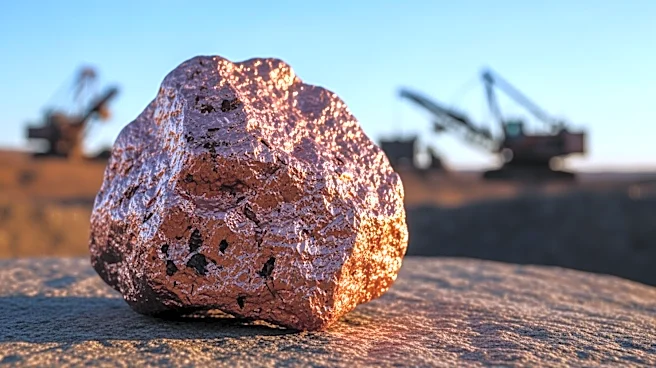
Glencore, a Swiss-based commodities trader and miner, announced a 19% increase in its first-quarter copper production, reaching 199,600 tons compared to 167,900 tons in the same period last year. This growth is attributed to improved ore grades in Africa
and increased output at the Antamina mine in Peru. Despite a 39% decline in cobalt production due to prioritizing copper output in the Democratic Republic of Congo, Glencore maintained its 2026 production guidance. The company noted that the Iran war had minimal impact on operations, although cost pressures from higher diesel and sulphuric acid prices were noted. However, stronger commodity prices are expected to offset these pressures.
Why It's Important?
The increase in copper production is significant as copper is a critical component in electric vehicles, charging infrastructure, and power grids, all of which are seeing rising demand. Glencore's ability to boost production despite operational challenges and mine closures highlights its strategic focus on meeting global copper demand. The company's performance also reflects broader trends in the commodities market, where rising prices can help offset increased operational costs. This development is crucial for stakeholders in the mining and electric vehicle industries, as it impacts supply chains and market dynamics.
What's Next?
Glencore's continued focus on copper production suggests a strategic alignment with the growing demand for electric vehicles and renewable energy infrastructure. The company may face ongoing challenges related to cost pressures and geopolitical factors, but its strong commodity pricing could support further expansion. Stakeholders will likely monitor Glencore's production strategies and market performance closely, as these will influence global supply and pricing trends in the copper market.