







What's Happening?
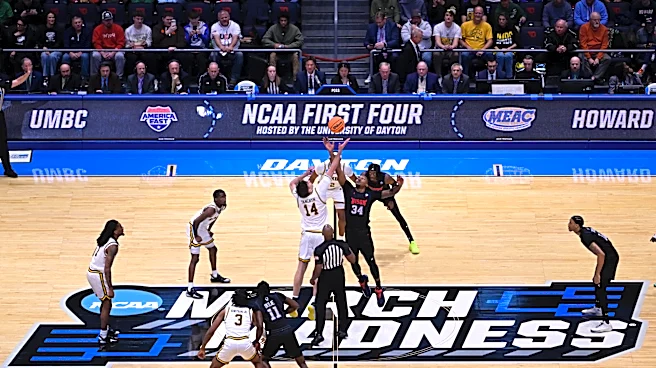
The NCAA is considering expanding its men's and women's basketball tournaments to 76 teams, potentially starting next season. This expansion is primarily driven by financial incentives and the desire of major conferences to include more teams. The proposal,
reported by ESPN's Pete Thamel, suggests that the expansion could be finalized by mid-May, pending approval from several NCAA committees and media partners like ESPN, CBS Sports, and TNT Sports. The expansion would increase the number of at-large berths from 37 to 45, benefiting major conferences like the SEC and Big Ten, which have historically dominated the tournament fields. The current men's tournament format includes 68 teams, a structure in place since 2011, while the women's tournament has had 68 teams for the past five seasons.
Why It's Important?
The proposed expansion of the NCAA tournaments is significant as it could further consolidate the dominance of major conferences in college basketball. By increasing the number of at-large berths, conferences with more financial resources and competitive teams, such as the SEC and Big Ten, are likely to benefit the most. This could widen the gap between major and non-major conferences, as smaller conferences may not see a proportional increase in tournament representation. The expansion is also expected to generate more revenue through enhanced media deals, benefiting the NCAA and its media partners. However, it raises concerns about the equitable distribution of opportunities for smaller schools and the potential dilution of the tournament's competitive integrity.
What's Next?
If the expansion is approved, the NCAA will need to finalize the logistics of the new tournament format, including the scheduling of additional games and the allocation of at-large berths. Major conferences are expected to continue advocating for the expansion, emphasizing the benefits of increased access for their teams. Meanwhile, smaller conferences may push for a fairer distribution of at-large berths to ensure their teams have a chance to compete. The decision will likely influence future media negotiations and could set a precedent for further expansions in other NCAA sports.