


What's Happening?
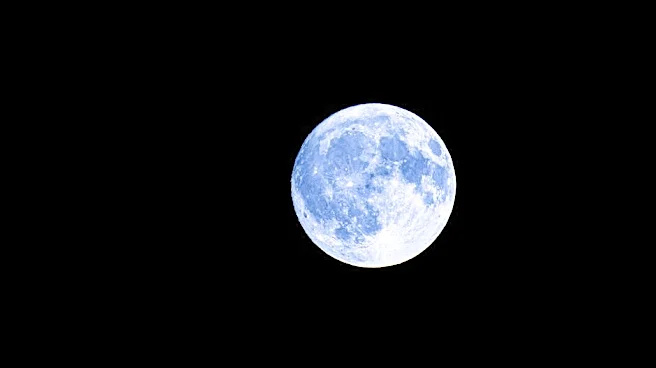
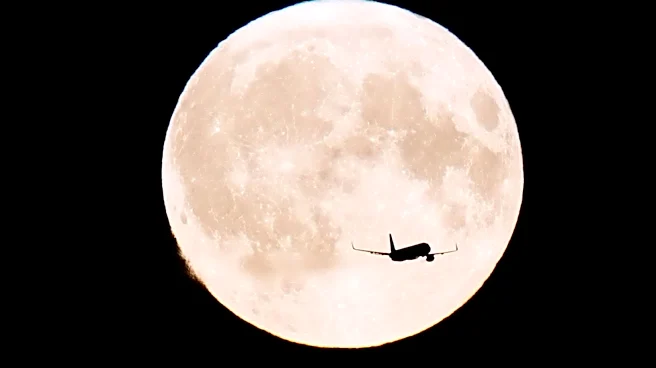
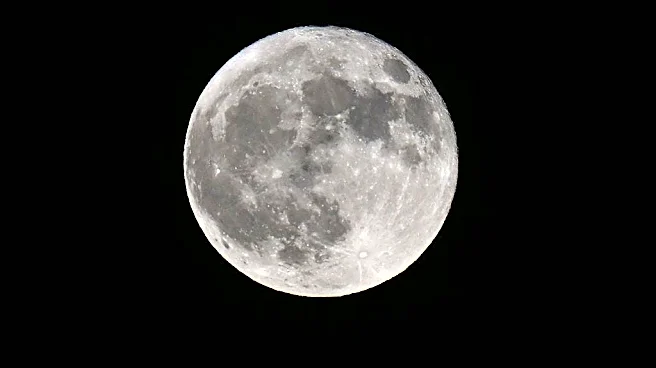
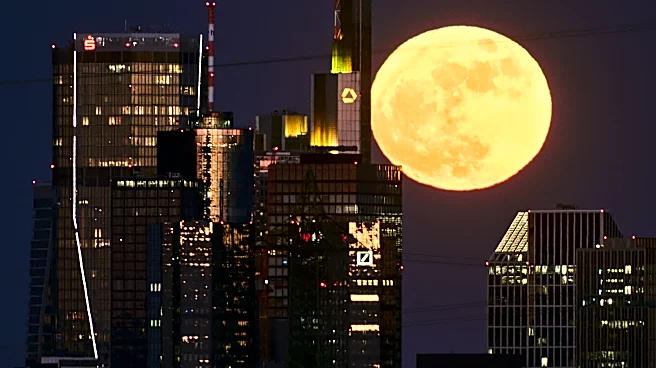
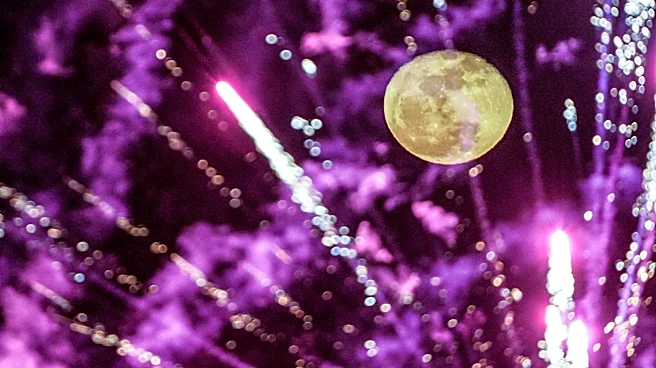
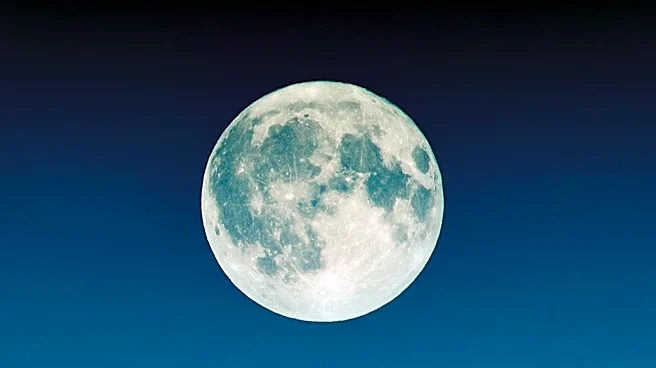
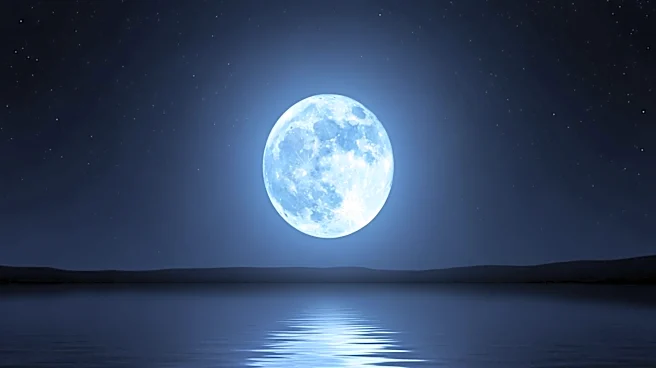
On May 31, a Blue Moon will occur, marking the second full moon in a calendar month. This phenomenon has captivated popular culture for over a century, influencing music, film, and even beverages. The term 'Blue Moon' has been associated with various
cultural artifacts, including a 1934 song performed by artists like Ella Fitzgerald and a recent film by Richard Linklater. The concept of a Blue Moon, which can also refer to the third full moon in a season with four full moons, has roots in historical texts dating back to the 16th century. The fascination with the Blue Moon is partly due to its rarity and the emotive connections it evokes, as explained by Kevin Schindler, a historian at Lowell Observatory.
Why It's Important?
The Blue Moon phenomenon highlights the intersection of astronomy and culture, demonstrating how celestial events can influence human creativity and tradition. This event underscores the moon's enduring role in shaping cultural narratives and artistic expressions. The Blue Moon's rarity has made it a symbol of uniqueness and special occasions, reflected in the idiom 'once in a Blue Moon.' This cultural significance can impact industries such as entertainment and marketing, where the Blue Moon is used to evoke a sense of wonder and rarity. The event also serves as a reminder of humanity's historical and ongoing fascination with the moon, influencing everything from ancient calendars to modern celebrations.
What's Next?
As the Blue Moon approaches, it is likely to inspire various cultural and commercial activities. Observatories and educational institutions may host events to engage the public in lunar observation, while businesses might leverage the event for marketing campaigns. The Blue Moon could also prompt discussions about the moon's role in different cultures and its impact on human history. Additionally, the event may encourage further exploration of lunar phenomena and their significance in both scientific and cultural contexts.
Beyond the Headlines
The Blue Moon's cultural resonance extends beyond its immediate visual appeal, touching on deeper themes of time, rarity, and human connection to the cosmos. It reflects the broader human tendency to find meaning in natural phenomena and incorporate them into cultural narratives. This event also highlights the moon's role in various cultural traditions, such as the Lunar New Year and religious observances tied to lunar cycles. The Blue Moon serves as a reminder of the interconnectedness of science, culture, and history, illustrating how celestial events can transcend their scientific origins to become integral parts of human storytelling.