
What's Happening?
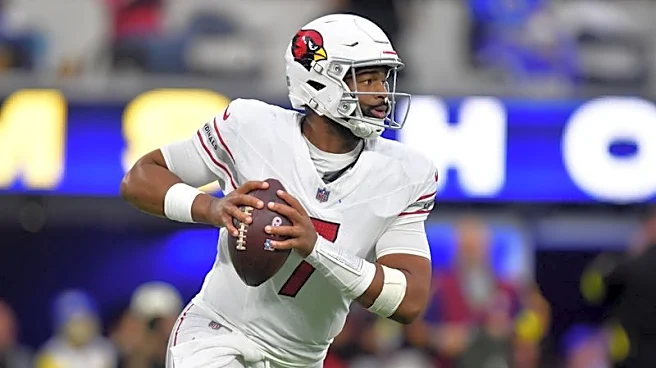
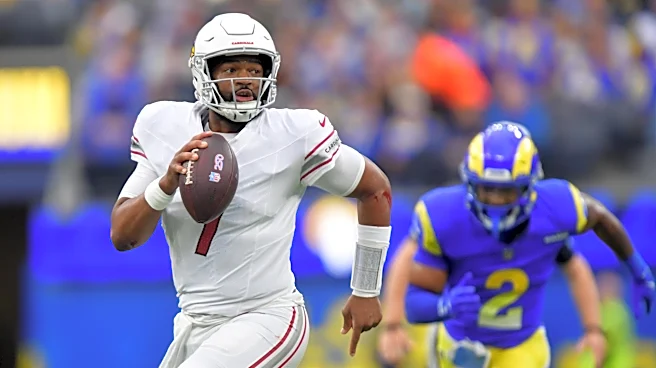
Jacoby Brissett, who initially signed a two-year, $12.5 million contract to serve as a backup quarterback for the Arizona Cardinals, is now seeking a contract adjustment after being named the team's starter.
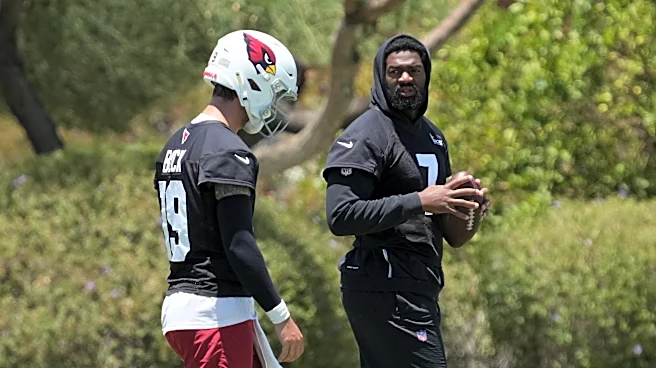
Last year, Brissett ended up starting 12 games despite being signed as a backup to Kyler Murray. This year, after a period of uncertainty regarding the starting quarterback position, Brissett has been confirmed as the starter. Devin McCourty, a former teammate of Brissett, confirmed that Brissett believes his role change warrants a contract adjustment. Brissett's current contract averages $6.25 million per year, significantly lower than the $20 million baseline for veteran starters. The Cardinals are not obligated to adjust his contract, and holdouts have become costly due to daily fines. However, a 'hold-in' could be a possibility, which might open opportunities for other quarterbacks like Gardner Minshew or Carson Beck.
Why It's Important?
The situation highlights the complexities of NFL contracts and the financial implications for players who exceed their initial roles. Brissett's case underscores the challenges faced by players who outperform their contracts and seek compensation that reflects their contributions. For the Cardinals, the decision to adjust Brissett's contract could impact team dynamics and financial planning. If Brissett holds out or holds in, it could disrupt the team's preparations under a new coaching staff and offensive system. The outcome of this situation could set a precedent for how NFL teams handle similar cases in the future, affecting player negotiations and team strategies across the league.
What's Next?
The Cardinals must decide whether to adjust Brissett's contract or risk potential disruptions to their team dynamics. If Brissett chooses to hold in, it could lead to increased opportunities for other quarterbacks on the roster, potentially altering the team's strategy. The decision will likely involve negotiations between Brissett's representatives and the Cardinals' management. The outcome could influence future contract negotiations for players who find themselves in similar situations, potentially leading to changes in how NFL contracts are structured to accommodate role changes.