



What's Happening?
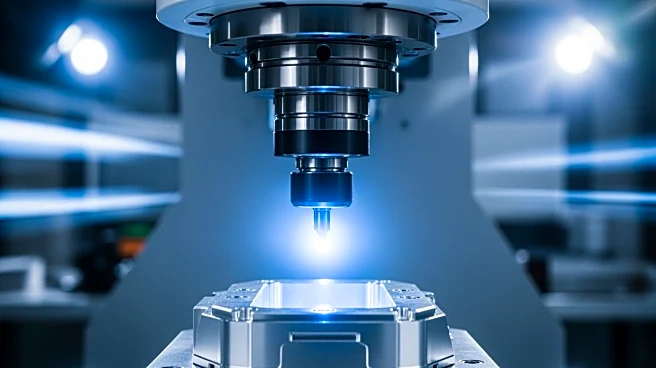
Agile CNC Prototyping is transforming the hardware development landscape by integrating digital design with physical manufacturing, leading to significant reductions in development cycles and error costs. This strategy, which emphasizes real-time collaboration and modular programming, allows for rapid iteration and flexibility in production. By utilizing digital twin simulations and parallel design-manufacturing feedback loops, the approach addresses the traditional bottlenecks of protracted prototype iteration cycles and high error correction costs. The National Institute of Standards and Technology highlights the seamless integration of data flow as a cornerstone of this agile approach, which shifts from traditional predictive manufacturing to intelligent
manufacturing.
Why It's Important?
The adoption of Agile CNC Prototyping is crucial for industries like automotive and consumer electronics, where rapid innovation and time-to-market are critical. By reducing development cycles by 50% and error costs by 65%, companies can significantly enhance their competitive edge. This strategy not only minimizes material waste and rework labor but also accelerates the R&D process, allowing for quicker market testing and product refinement. The approach supports complex component innovation, enabling industries to meet high standards of dimensional accuracy and material strength, which are essential for maintaining quality and compliance with industry regulations.
What's Next?
Enterprises looking to implement Agile CNC Prototyping should begin by diagnosing internal process bottlenecks and evaluating the digital integration capabilities of potential CNC machining partners. Conducting small pilot projects can help verify the efficiency of collaboration and data exchange. As more companies adopt this strategy, it is expected to become a standard practice in hardware development, driving further advancements in manufacturing technologies and methodologies.
Beyond the Headlines
The shift towards Agile CNC Prototyping represents a broader trend in manufacturing towards digital transformation and intelligent systems. This approach not only enhances efficiency but also fosters a culture of innovation and continuous improvement. By front-loading quality control and integrating cross-functional teams early in the design process, companies can better manage risks and optimize resource allocation, ultimately leading to more sustainable and resilient manufacturing practices.