



What's Happening?
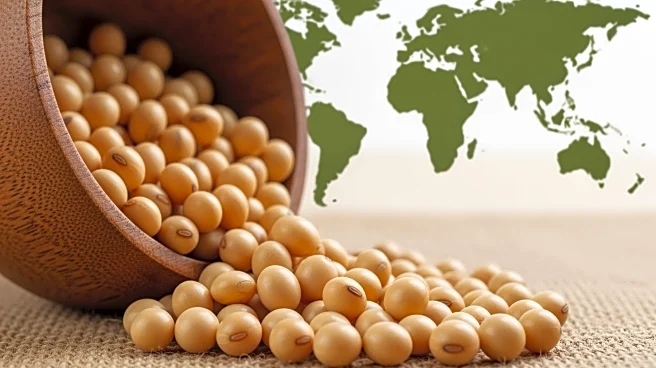
Grain analysts anticipate that the U.S. Department of Agriculture (USDA) will reduce its forecast for U.S. soybean exports in its upcoming crop reports. This adjustment is expected due to lower sales to China and increased competition from Brazil, which is harvesting a record soybean crop. The USDA's reports, set to be released on Monday, will include a monthly world supply/demand report, a U.S. crop production report, and a quarterly rundown of U.S. grain stockpiles. Analysts are particularly interested in how the USDA will adjust its soybean export forecast, given the slow pace of sales to China. As of January 1, net soybean sales were down nearly 29% from the previous year. The USDA had previously projected a 13% year-over-year drop in soybean exports for the 2025-2026
season, but the actual sales figures suggest a larger decline.
Why It's Important?
The USDA's potential revision of soybean export forecasts is significant for U.S. farmers and the agricultural market. Lower export demand could impact soybean prices and farm incomes, especially as farmers face challenges from global tariff wars and competition from Brazil. The U.S. has been a major soybean supplier to China, but trade tensions have shifted some of this demand to Brazil. The USDA's reports will provide crucial data for market players to assess the future of U.S. soybean exports and the broader agricultural economy. A reduction in export forecasts could also influence government policy and aid programs designed to support farmers affected by trade disruptions.
What's Next?
Following the release of the USDA's reports, market participants will closely monitor any adjustments to soybean export forecasts and their implications for U.S. agriculture. The reports will also provide insights into U.S. corn production and stock levels, which are expected to remain high despite a slight reduction in yield estimates. The USDA's data will be critical for farmers and traders as they plan for the remainder of the marketing year. Additionally, any changes in U.S. agricultural policy or trade agreements with China could further impact the soybean market.