







What's Happening?
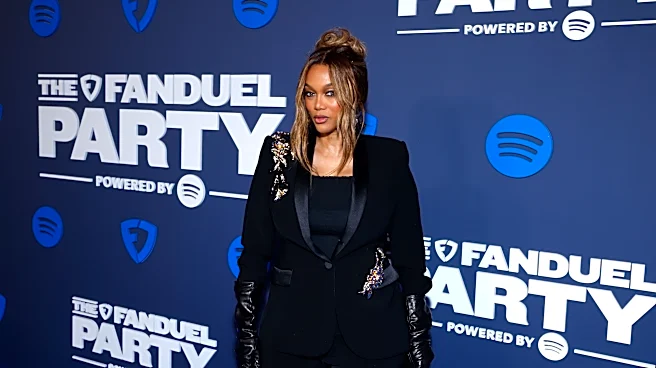
Tyra Banks has filed a lawsuit against Netflix, claiming that the streaming service's docuseries 'Reality Check: Inside America's Next Top Model' misrepresented her and created a false narrative. The series, which aired in February, revisits the reality
competition show Banks created in 2003, highlighting allegations of racism, exploitation, body shaming, and sexual assault made by former contestants. Banks alleges that the documentary's creators misled her about the project's intent and edited her interview to omit her accountability statements, portraying her in a defamatory light. The lawsuit accuses directors Mor Loushy and Daniel Sivan of manipulating footage to suggest that Banks allowed a contestant to be sexually assaulted and exploited the incident for ratings. Banks is seeking damages, claiming the narrative presented is a fabrication streamed to millions globally.
Why It's Important?
This lawsuit underscores the ongoing debate about the ethical responsibilities of documentary filmmakers, particularly in the context of reality television. The case highlights the potential for selective editing to shape public perception and the reputational risks for individuals involved in such productions. For Netflix, the lawsuit could impact its reputation and raise questions about its vetting processes for documentary content. The outcome may influence how future documentaries are produced, particularly those revisiting controversial or sensitive topics. For Banks, the lawsuit represents a significant effort to protect her legacy and address allegations that could affect her career and public image.
What's Next?
The legal proceedings will likely involve a detailed examination of the documentary's production process, including the raw footage and editing decisions. A jury will determine the damages, if any, owed to Banks. The case may prompt Netflix to review its documentary practices and could lead to industry-wide discussions about ethical standards in documentary filmmaking. Stakeholders, including former contestants and reality TV producers, may closely watch the case for its implications on how reality TV history is documented and portrayed.