




What's Happening?
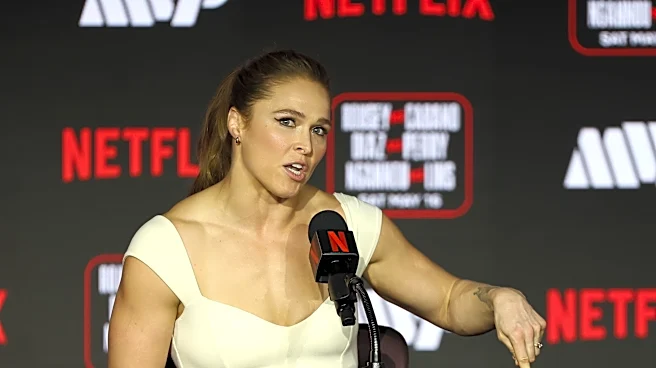
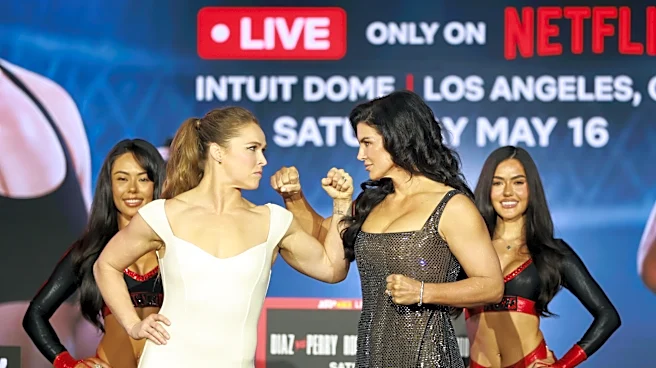
Ronda Rousey, a former UFC champion, is set to return to mixed martial arts (MMA) to face Gina Carano in a highly anticipated match. This event marks Rousey's return to the sport after a decade-long hiatus following her last fight in 2016, where she suffered
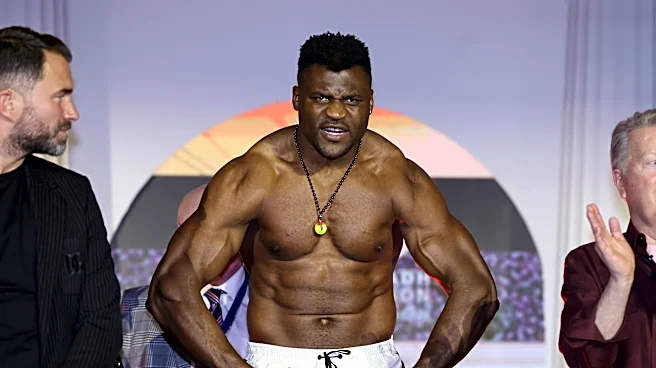
a defeat against Amanda Nunes. Rousey, who has been living a quieter life with her family, has decided to come back to MMA to find closure and rewrite the ending of her fighting career. The fight against Carano, a pioneer in women's MMA, is scheduled to take place on May 16 at the Intuit Dome in Inglewood, California. This event will be the first MMA card to air on Netflix, featuring other notable fighters like Nate Diaz and Francis Ngannou. Rousey's return is not about a comeback but rather about closing a chapter that she felt was left unfinished.
Why It's Important?
Rousey's return to MMA is significant as it highlights the ongoing evolution and popularity of women's sports, particularly in combat sports. Her decision to fight Carano on a platform like Netflix indicates a shift in how MMA events are being marketed and consumed, potentially reaching a broader audience. This move could influence future broadcasting deals and the way MMA is presented to fans. Additionally, Rousey's return could reignite interest in women's MMA, inspiring a new generation of female fighters. Her fight with Carano also underscores the importance of mental health and personal closure in sports, as Rousey seeks to reconcile with her past experiences in the octagon.
What's Next?
Following the fight, Rousey plans to move to Hawaii with her family, where she hopes to live a more private life. However, she has expressed interest in potentially becoming a promoter, which could lead to significant changes in the MMA industry, especially regarding fighter compensation and event organization. Rousey's involvement in promoting could challenge existing structures within organizations like the UFC, advocating for better conditions for fighters. Her fight with Carano may also set a precedent for other retired fighters considering a return for personal reasons, rather than purely competitive ones.
Beyond the Headlines
Rousey's return to MMA also brings attention to the broader issues of athlete health and safety, particularly concerning head injuries and mental well-being. Her diagnosis of migraine with aura and cortical spreading depression highlights the need for better medical support and awareness for fighters dealing with similar conditions. This event could lead to increased advocacy for improved health protocols in combat sports. Furthermore, Rousey's story emphasizes the cultural impact of sports figures and their ability to influence societal perceptions of resilience, redemption, and personal growth.