






What's Happening?
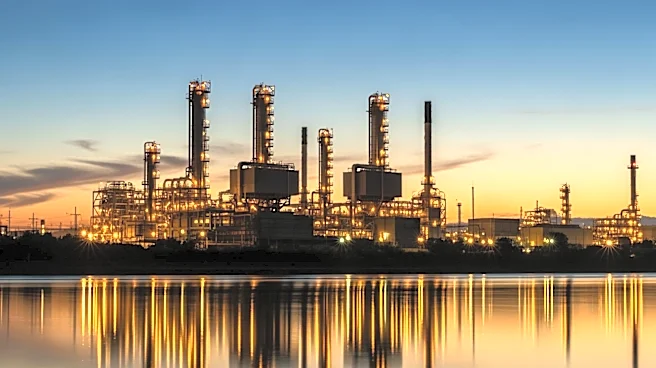
Aliko Dangote, Africa's richest man, has announced plans to expand his refining operations into East Africa by proposing a large-scale refinery project. Speaking at the 'Africa We Build' summit in Nairobi, Dangote outlined his vision to construct a 650,000
barrels-per-day refinery in collaboration with East African governments, contingent on policy alignment and long-term support. The proposed refinery aims to serve a regional market including Kenya, Uganda, Tanzania, South Sudan, and the Democratic Republic of Congo. This initiative is part of a broader strategy to reduce Africa's dependency on exporting raw materials and importing refined products. Dangote emphasized the need for domestic processing and industrialization to enhance economic growth and job creation. The project builds on the success of the Dangote Refinery in Nigeria, which has significantly impacted regional fuel markets.
Why It's Important?
The proposed refinery project is significant as it represents a major step towards industrial self-sufficiency in East Africa. By processing raw materials locally, the region could retain more economic value and create jobs, addressing long-standing economic challenges. The project also highlights the potential for increased regional cooperation and economic integration, as it involves multiple countries working together to share infrastructure and resources. Additionally, the refinery could enhance energy security in the region by reducing reliance on imported refined products. This move aligns with broader efforts to boost intra-African trade and mobility, as Dangote also called for visa-free policies to facilitate trade across the continent. The success of this project could serve as a model for other regions in Africa, promoting industrialization and economic development.
What's Next?
If the project receives the necessary support from regional governments, construction of the refinery could begin, with completion expected within four to five years. The success of the project will depend on consistent government policies and long-term commitments from local leadership. As discussions continue, stakeholders will need to address potential challenges such as infrastructure development, regulatory alignment, and investment security. The project could also prompt further discussions on regional economic policies and trade agreements, as leaders seek to maximize the benefits of industrialization. Additionally, the project may influence other African countries to pursue similar initiatives, potentially leading to a shift in the continent's economic landscape.