






What's Happening?
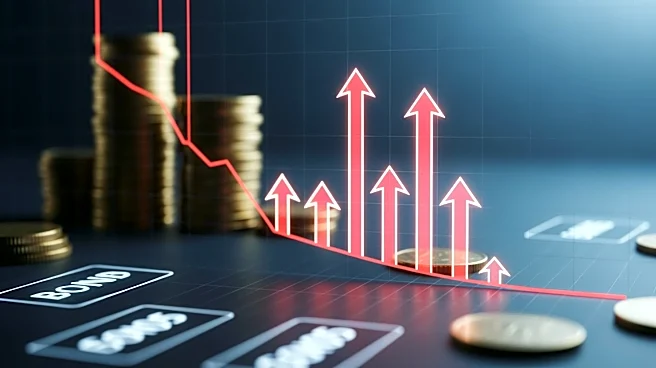
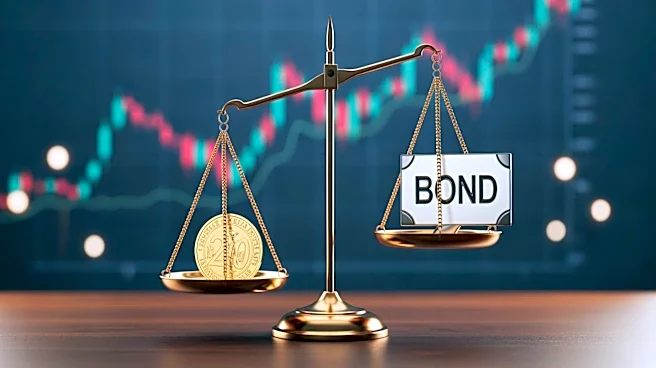
Rising long-term bond yields have recently caused some concern for stock investors, with the 30-year Treasury yield reaching 5.19%, the highest since 2007, and the 10-year yield increasing by 62 basis points to 4.58% since February. Despite these historically
troubling thresholds, the S&P 500 has risen nearly 8% since the end of February, as investors remain optimistic about the potential of AI hyperscalers. Daniela Hathorn, a senior market analyst at Capital.com, notes that while bond market stress is reminiscent of 2007, the equity market is experiencing optimism similar to 2000. Hathorn suggests that investors should focus on potential disruptions to the stock market rally, such as changes in AI capital expenditure, geopolitical tensions in Iran, and economic indicators like consumer spending and job growth.
Why It's Important?
The current situation highlights a divergence between bond and stock market reactions, with investors seemingly prioritizing the growth potential of AI over traditional economic indicators. This optimism could be risky if external factors, such as geopolitical tensions or economic downturns, materialize. The potential for increased oil prices due to tensions in Iran could exacerbate inflation concerns, impacting consumer spending and economic stability. Additionally, any slowdown in AI investment could signal a shift in market dynamics, affecting stock valuations. Understanding these risks is crucial for investors to navigate potential market volatility.
What's Next?
Investors will likely monitor upcoming economic indicators and geopolitical developments closely. Key events include Nvidia's earnings report, which could provide insights into AI investment trends, and any developments in Iran that might affect oil prices. Market participants will also watch for signs of economic deterioration, such as reduced consumer spending or slower job growth, which could influence investment strategies. The interplay between these factors and rising bond yields will be critical in determining the future trajectory of the stock market.