




What's Happening?
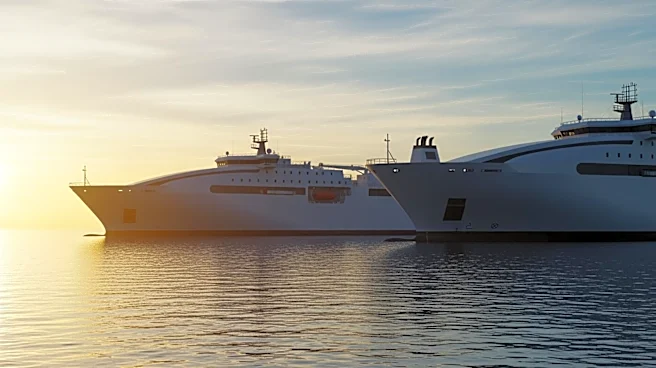
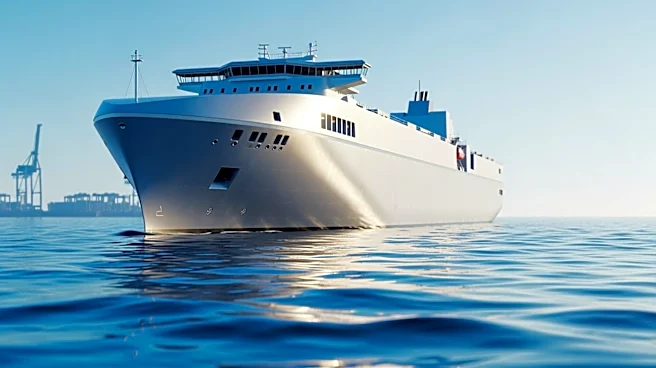
Exmar has officially received the first ammonia dual-fuel vessel, named Antwerpen, marking a significant milestone in the adoption of ammonia as a marine fuel. This vessel is the first of three scheduled for delivery this year, with a fourth expected
in early 2027. The ships, developed in collaboration with HD Hyundai, have a total capacity of 46,000 cubic meters of ammonia and are pioneers in using ammonia as both cargo and fuel. The project, initiated in 2022, involved partnerships with Hyundai Mipo, WinGD, Nord Gas Solutions, and Lloyd’s Register. The vessel's engine, developed by WinGD, features high-pressure ammonia injection and is designed to match the performance of diesel engines. The delivery of Antwerpen is seen as a critical step towards accelerating the use of ammonia in the shipping industry, addressing challenges related to toxicity and corrosion while contributing to decarbonization efforts.
Why It's Important?
The delivery of the Antwerpen vessel represents a significant advancement in the maritime industry's efforts to reduce emissions and transition to cleaner fuels. Ammonia, as an efficient hydrogen carrier, offers a promising alternative to conventional marine fuels, potentially lowering emissions by up to 90 percent. This development aligns with global decarbonization goals and could lead to widespread adoption of ammonia as a marine fuel, influencing regulations and industry standards. The successful implementation of ammonia-fueled vessels could drive innovation in ship design and fuel technology, benefiting both environmental sustainability and operational efficiency. As the shipping industry seeks to reduce its carbon footprint, the lessons learned from these pioneering vessels could be applied to various vessel types, promoting broader adoption of alternative fuels.
What's Next?
Following the delivery of Antwerpen, Exmar plans to receive two more ammonia dual-fuel vessels this year, with a fourth expected in early 2027. The company anticipates that the operational experience gained from these ships will accelerate the adoption of ammonia as a marine fuel across the industry. As regulations evolve to accommodate ammonia's use, other shipping companies may follow suit, potentially leading to increased orders for ammonia-fueled vessels. The success of these vessels could also prompt further research and development in ammonia fuel technology, addressing challenges related to toxicity and corrosion. Stakeholders, including regulatory bodies and environmental groups, will likely monitor the performance and impact of these vessels, influencing future policy and industry practices.
Beyond the Headlines
The introduction of ammonia as a marine fuel raises important considerations regarding safety and environmental impact. While ammonia offers significant emissions reductions, its toxicity and corrosive nature present challenges that must be addressed through stringent safety protocols and technological innovations. The development of ammonia-fueled vessels may also influence global shipping regulations, requiring updates to international frameworks to ensure safe and effective use. Additionally, the shift towards ammonia could stimulate investment in related infrastructure, such as storage facilities and refueling stations, further supporting the transition to cleaner maritime operations. As the industry adapts to these changes, collaboration among shipbuilders, fuel suppliers, and regulatory agencies will be crucial to overcoming technical and logistical hurdles.