
What's Happening?
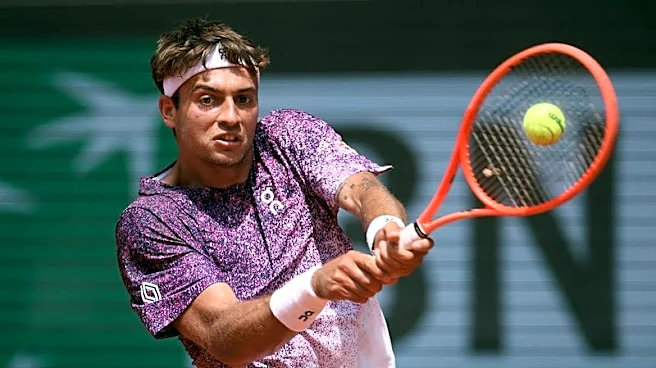
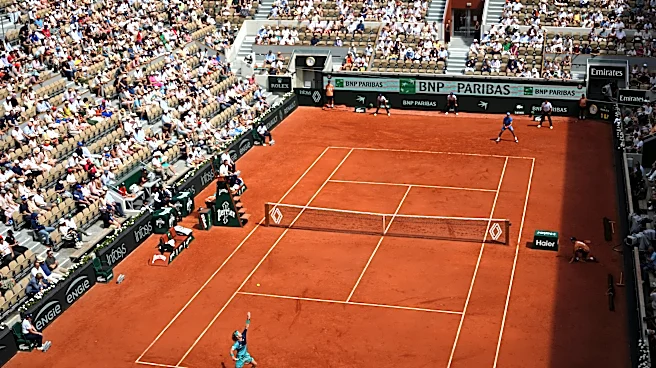
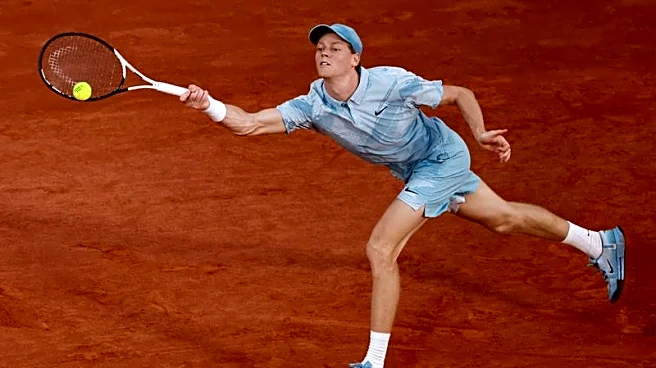
Zachary Svajda, an American tennis player ranked 85th, has made a surprising advance to the second week of the French Open. Despite having limited experience on clay courts, Svajda defeated Francisco Cerundolo, a seasoned clay-court player, with scores
of 6-3, 6-4, 3-6, 4-6, 6-3. This marks Svajda's first time competing in the main draw at Roland Garros. His victory comes after a recent loss to Max Hans Rehberg in the Geneva Open qualifiers. Svajda's emotional win coincided with his late father's birthday, adding personal significance to his achievement. Svajda's father, Tom Svajda, who passed away from cancer, was a tennis coach in San Diego. Svajda will face Flavio Cobolli in the next round, aiming for a spot in the quarterfinals.
Why It's Important?
Svajda's unexpected success at the French Open highlights the potential for emerging American talent in international tennis. His advancement underscores the importance of perseverance and adaptability, especially on challenging clay surfaces. This achievement could inspire other young American players to pursue success on the global stage. Additionally, Svajda's emotional tribute to his father resonates with audiences, adding a personal narrative to his professional journey. His progress in the tournament may attract more attention to American tennis, potentially increasing support and investment in the sport.
What's Next?
Svajda is set to compete against Flavio Cobolli, ranked 14th, in the next round of the French Open. A victory would secure him a place in the quarterfinals, further solidifying his status as a rising star in tennis. The match will test Svajda's ability to maintain his performance under pressure and against higher-ranked opponents. As he continues in the tournament, Svajda may gain more media attention and fan support, which could influence his future career opportunities and sponsorships.
Beyond the Headlines
Svajda's journey at the French Open highlights the emotional and psychological aspects of sports, particularly in dealing with personal loss. His ability to channel his emotions into his performance may serve as a case study for sports psychologists and coaches. Furthermore, his success on clay courts, despite limited experience, could lead to discussions on training methods and strategies for American players to excel on diverse surfaces. Svajda's viral social media presence also illustrates the role of digital platforms in shaping athletes' public personas and connecting with fans.