


What's Happening?
Bars are increasingly transforming into community hubs rather than just places to consume alcohol. This shift is driven by a decline in alcohol consumption among younger demographics, who are seeking spaces for connection and belonging. Establishments
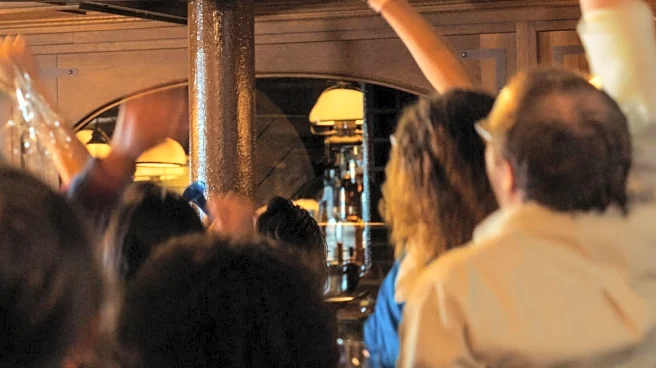
are adopting the concept of a 'third place,' a term coined by sociologist Ray Oldenburg, to describe informal gathering spots separate from home and work. Bars in Brooklyn, for example, are hosting diverse events such as tarot readings, comedy open mics, and live music nights to draw in patrons. These activities are designed to create a welcoming environment where customers feel comfortable and engaged, thereby fostering a sense of community.
Why It's Important?
This trend highlights a significant shift in the hospitality industry, where the focus is moving from product-centric to experience-centric offerings. By becoming community hubs, bars can attract a loyal customer base, which is crucial in an era where traditional marketing strategies are less effective. This approach not only helps bars differentiate themselves in a competitive market but also addresses broader societal issues such as loneliness and social isolation. Establishments that successfully create a sense of community can enjoy increased foot traffic and customer loyalty, providing a sustainable business model in the long term.
What's Next?
Bars looking to adopt this model will need to carefully curate their events and offerings to align with the interests of their local communities. This may involve collaborating with local artists, musicians, and other community groups to host events that resonate with patrons. Additionally, bars will need to train staff to prioritize hospitality and customer engagement over traditional service models. As more establishments embrace this trend, it could lead to a broader transformation in the hospitality industry, with a greater emphasis on community building and experiential marketing.
Beyond the Headlines
The shift towards community-focused bars also raises questions about the future of social spaces in urban environments. As remote work becomes more prevalent, the demand for 'third places' where people can gather and socialize is likely to increase. This trend could influence urban planning and the development of public spaces, as cities seek to accommodate the changing needs of their residents. Furthermore, the emphasis on community engagement could lead to new business models in other sectors, as companies look to create meaningful connections with their customers.