






What's Happening?
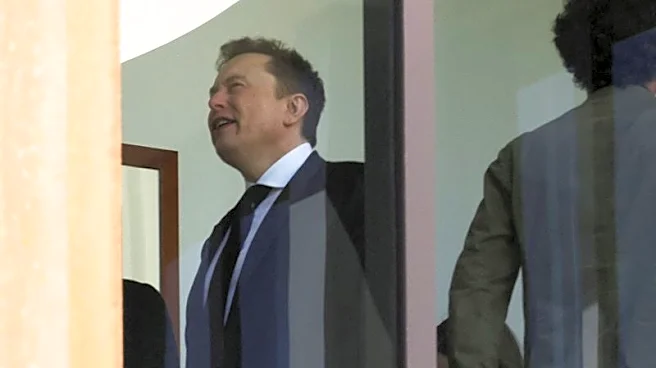
Elon Musk recently concluded his testimony in a legal case against OpenAI co-founder Sam Altman, held in an Oakland court. Musk, who co-founded OpenAI with Altman and Greg Brockman in 2015, claims that the original intent of the organization was to develop
artificial intelligence safely and openly. However, Musk alleges that his co-founders deviated from this mission, transforming OpenAI into a tech giant valued at $852 billion. During the cross-examination, Altman's defense attorneys questioned Musk's business decisions, suggesting that his actions were aimed at dominating the AI field rather than safeguarding it. The case has drawn significant attention due to Musk's high-profile status and the implications for AI development.
Why It's Important?
The lawsuit underscores the growing tensions in the AI industry regarding ethical development and control. As AI technology becomes more integrated into various sectors, the debate over its regulation and ethical use intensifies. Musk's allegations against OpenAI highlight concerns about the concentration of power in AI development and the potential risks of prioritizing profit over safety. This case could influence public policy and corporate strategies in AI, affecting stakeholders ranging from tech companies to regulatory bodies. The outcome may set precedents for how AI companies balance innovation with ethical considerations.